A UPS battery bank can show a perfect float voltage for years and then, on the day the power goes out, carry the load for only a few minutes instead of the backup time it was designed for. Float voltage says very little about real capacity: a sulfated, dried-out cell or a loose connection can look normal while on charge and fail as soon as current is demanded. The only direct way to know how much energy a bank can deliver is to discharge it in a controlled way and measure how long it sustains the specified current or power. This guide explains how a capacity test on stationary lead-acid batteries is planned and carried out, which standards apply and how to interpret the results.
Why float voltage is not enough
On float, the charger holds each cell at a constant voltage and only a small current flows. Under those conditions almost any cell, even a badly degraded one, reaches the expected voltage. Problems appear under load: internal resistance rises, voltage drops early and some cells reach the end voltage long before the others. Because the cells are in series, the weakest one limits the performance of the entire bank.
That is why stationary battery maintenance combines periodic inspections (voltages, temperature, torque and physical condition), trend measurements and, at intervals, a discharge test that confirms capacity.
Reference standards
- IEEE 450: recommended practice for maintenance, testing and replacement of vented (flooded) lead-acid batteries in stationary applications.
- IEEE 1188: the equivalent for valve-regulated lead-acid (VRLA) batteries, the most common type in UPS systems.
- IEEE 1106: covers stationary nickel-cadmium batteries.
- NFPA 70E: Article 320 covers safety requirements for work on batteries and battery rooms. In Mexico, NOM-029-STPS sets the safety conditions for maintenance activities on electrical installations.
These standards define the types of test, how to calculate capacity and when a bank should be replaced. The exact intervals and factors depend on the current edition and the battery type, so check them directly together with the manufacturer’s data.
Types of discharge test
| Test | Purpose | When it is done |
|---|---|---|
| Acceptance | Verify that the bank meets the capacity specified by the manufacturer | At the factory or on receipt |
| Performance | Measure actual capacity and compare it with previous tests to see the trend | At installation and periodically during service life |
| Service | Confirm that the bank can carry the system’s actual duty cycle | According to the installation’s requirements |
In most maintenance programs the key test is the performance test, because it tracks degradation year after year and lets you plan replacement in advance.
Preparing for the test
Before test day
- Get the manufacturer’s discharge tables: current or power per cell for the chosen test duration, and the end voltage per cell.
- Make sure the bank is fully charged. The IEEE standards require the battery to be fully charged and stabilized before testing; follow the manufacturer’s procedure, including an equalizing charge if it recommends one.
- Carry out a pre-test inspection: float voltage of every cell, temperature, connection torque and, if possible, intercell connection resistance.
- Define a contingency plan. During the test and the recharge that follows, backup is limited or nonexistent: coordinate with operations, consider a temporary bank or UPS and choose a low-risk window.
End voltage and discharge rate
The end voltage per cell is the point at which the discharge is considered complete. Many lead-acid batteries use values around 1.75 V per cell, but the correct value depends on the rate and the manufacturer: always use the one from the table that matches your test. UPS loads are constant-power loads, so these banks are usually tested with constant-power tables (watts per cell) rather than constant-current tables.
Running the discharge
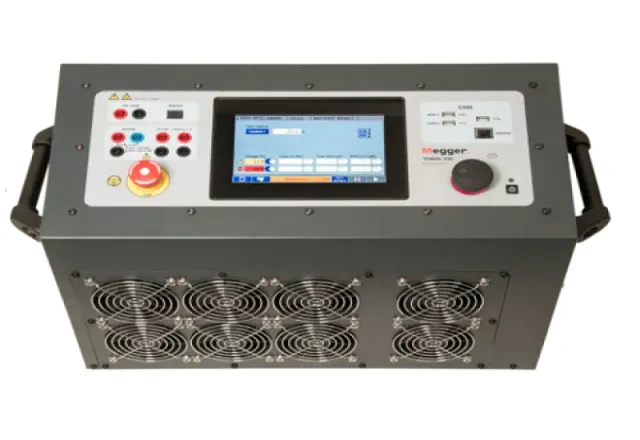
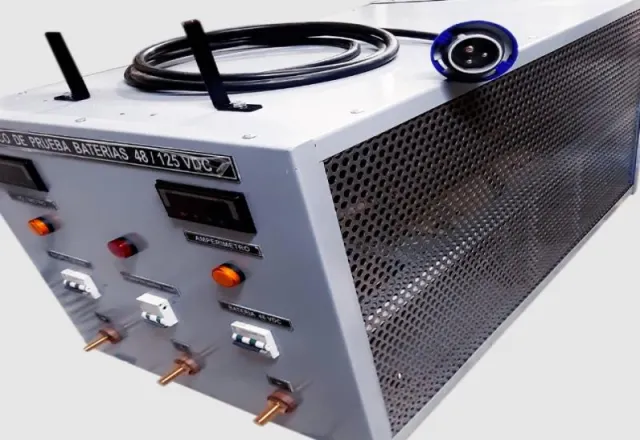
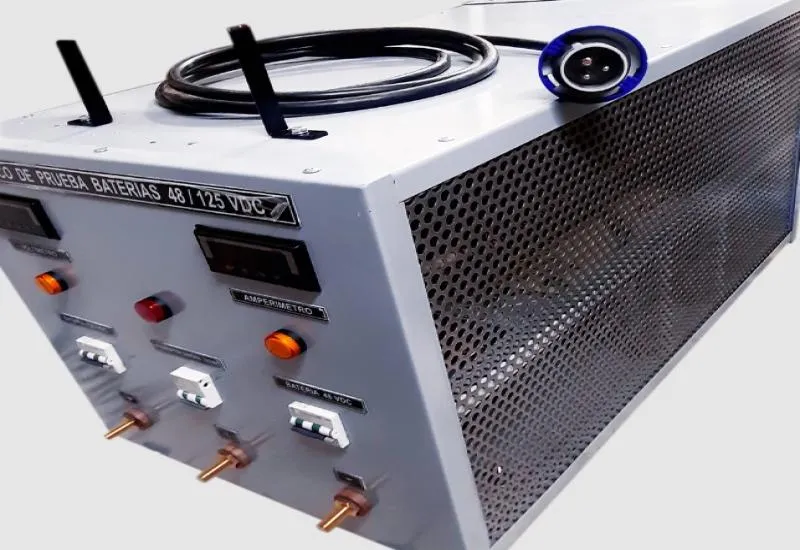
- Disconnect the bank from the critical load or isolate it according to the plan, and connect a DC load bank able to hold constant current or constant power throughout the test.
- Record the electrolyte or pilot-cell temperature at the start; it is used for capacity correction.
- Start the discharge and keep the rate constant. Record total voltage, current and each cell’s voltage at regular intervals, more often toward the end.
- Watch the cells that fall fastest. If a cell approaches polarity reversal, follow the manufacturer’s guidance; some procedures allow it to be bypassed and the test continued.
- Stop the test when total voltage reaches the end voltage multiplied by the number of cells, and note the elapsed time.
- Recharge the bank immediately and confirm it returns to normal float.
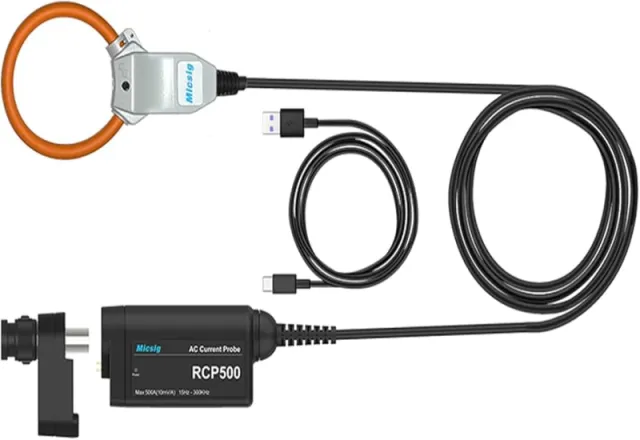
During the discharge, an inspection with a thermal imaging camera reveals high-resistance connections heating up under current, something that goes unnoticed on float.
Calculating and interpreting capacity
With the time-adjusted method, capacity is expressed as a percentage:
Capacity (%) = (actual time to end voltage ÷ rated time) × 100, corrected for temperature with the factors from the standard or the manufacturer.
Temperature matters because a cold battery delivers less capacity and a warm one delivers more on test, but ages faster in service. That is why results are referred to a reference temperature, normally 25 °C.
- Replacement criterion: IEEE 450 and IEEE 1188 recommend replacing the battery when its capacity falls below 80% of rated. Beyond that point degradation usually accelerates.
- Trend: a significant drop compared with the previous test justifies shortening the interval between tests, even if the bank is still above 80%.
- Weak cells: if a few cells limit the result, replacing them may make sense; if the spread is general, the whole bank is reaching the end of its life.
Ohmic measurements: useful, but no substitute for discharge
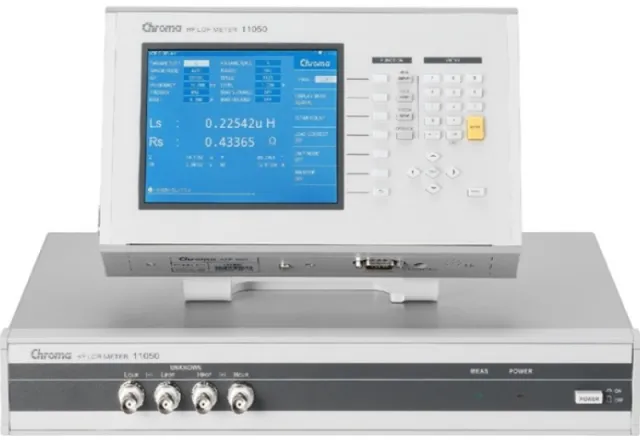
Impedance, conductance or internal resistance testers can evaluate each cell in minutes without discharging the bank. They are very valuable for tracking trends and spotting cells that deviate from the average, especially in VRLA batteries. However, their relationship to capacity is not exact: they help you decide where to look and when to run a discharge test, not replace it. For intercell connections, a micro-ohmmeter measurement confirms that contact resistance is low and uniform.
Safety
- A battery bank cannot be de-energized: voltage and stored energy are always present. Work with insulated tools and the protective equipment determined by the risk assessment.
- Lead-acid batteries release hydrogen, especially during charging and equalizing. Ensure ventilation and keep ignition sources away.
- Electrolyte is corrosive: wear face protection and acid-resistant gloves, and keep an eyewash station nearby.
- A DC short circuit can produce arcs and very high currents. Check polarity and the cable size of the load bank before connecting.
How CreativeIT can help
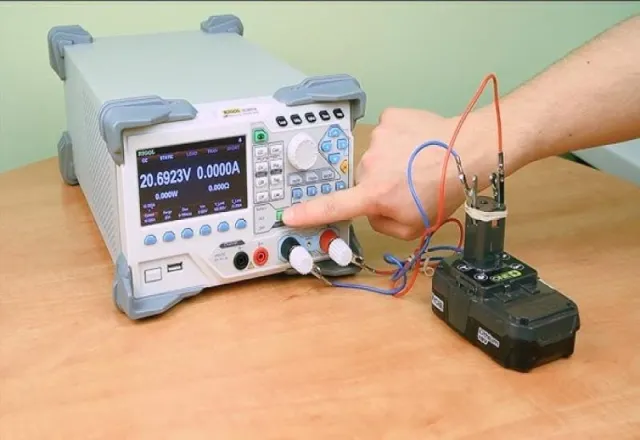
At CreativeIT Group in Monterrey we offer UPS battery discharge test equipment and industrial battery discharge testers in Puebla, along with DC electronic loads and thermography and low-resistance measurement services for maintaining your bank. Contact us at (81) 4777 6921 or info@creativeit.mx and tell us what kind of bank you need to test.