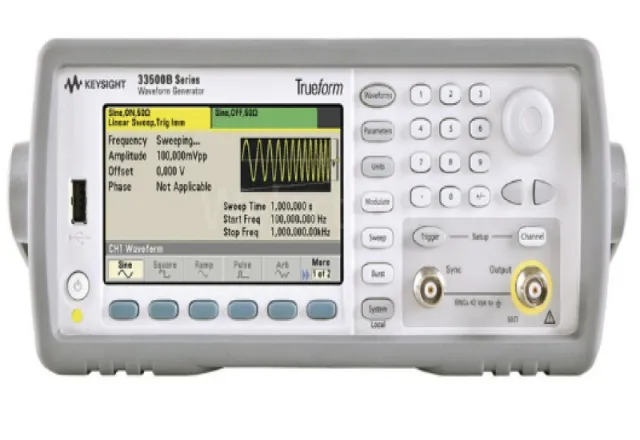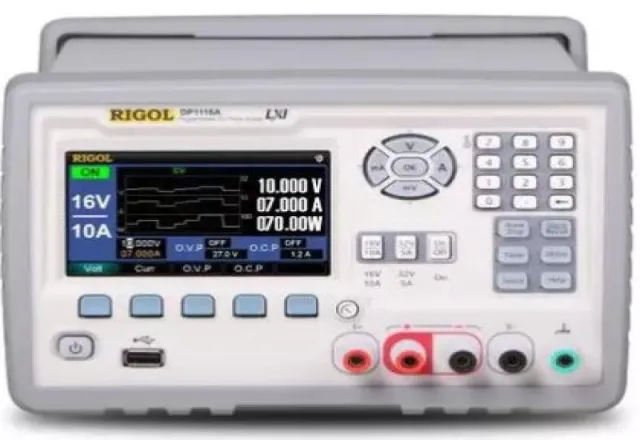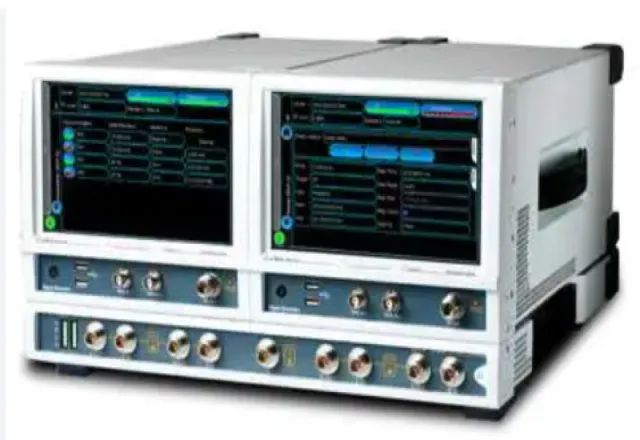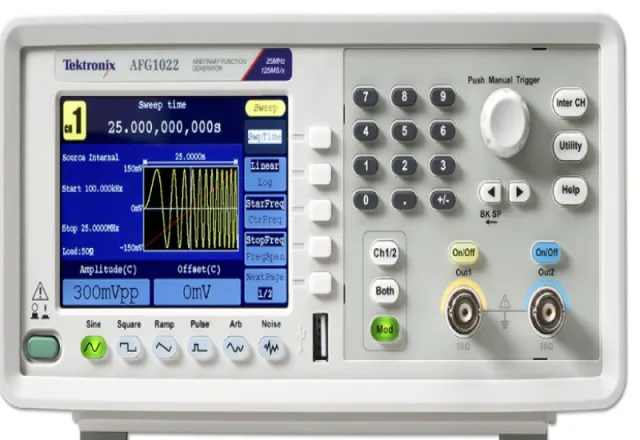
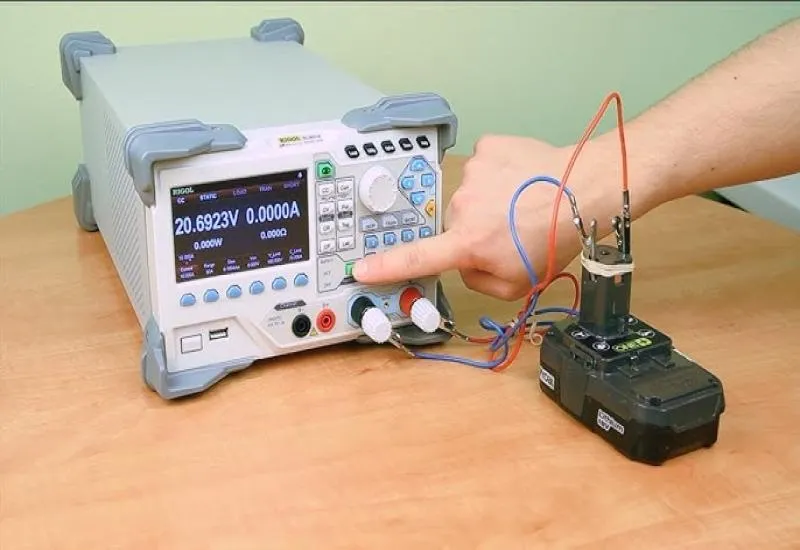
We have different electronic loads to simulate power consumption in all types of electronic devices.
What is an electronic load?
An electronic load is a test instrument designed to sink current and absorb energy from a power source. If a power supply is used to power a device, an electronic load is used to test the power supply by emulating the device under test (DUT). Power supplies and electronic loads are complementary test equipment. The power supply tests electronic circuits under specific supply conditions. The electronic load tests power sources or power conversion blocks under specific load constraints. An electronic load is a programmable instrument that offers the user several control modes, such as constant voltage (CV), constant current (CC), constant power (CP) or constant resistance (CR).
Who uses electronic loads?
Device manufacturers and design engineers use electronic loads to test numerous power devices, such as power supplies, DC-DC converters, chargers, adapters, batteries, solar panels, fuel cells and more.
Why do engineers use electronic loads instead of a fixed-value power resistor?
In situations where you need a purely resistive load and closed-loop control is not required, using a fixed-value power resistor is sufficient. A fixed-value resistor has many limitations. It is not suitable for loading and testing power sources that have complex test requirements. Such tasks require sophisticated electronic load functions to validate the various operating states.
How and where to use different DC electronic load operating modes, including:
Constant current operating mode
Constant voltage operating mode
Constant resistance operation
Constant power operation
Electronic load applications, including:
Power converter and inverter testing: this is a quick way to test DC-DC and AC/DC converters. The electronic load helps simulate the device’s power-up process. You can test the minimum and maximum input turn-on voltage level with different load levels. You can perform ripple, noise, load/line regulation, overvoltage and current protection tests with the electronic load.
Uninterruptible power supply (UPS): this is a complete test that requires an AC source, a DC source, a DC load and an AC load. The DC load uses the load bank to test the backup battery and the charger inside the UPS. An AC load tests the entire UPS system. A load bank test indicates the UPS’s ability to provide the required power, voltage stability and the efficiency of the control systems under varying load conditions.
Batteries and fuel cells: use constant load to reduce test time compared with resistive load banks. To test capacity, use CP mode to provide constant power draw as the battery voltage drops over time. The electronic load’s ability to program different load profiles with fast transitions allows profile testing for battery charge and discharge cycles.
Solar panels: this is a good solution for high-power photovoltaic testing, since solar panels can sink high current at a lower cost. Use CV mode to capture the I-V curve and incremental voltages to measure current. With portable devices, program the electronic load to simulate various device power states, such as sleep, power-saving and maximum power modes, for a power consumption test.
Portable devices: use the electronic load to simulate various device power states, such as sleep, power-saving and maximum power modes, to test power consumption.
How to select the right electronic load based on:
Form factor
– Choose a small form factor modular solution to give you the flexibility to scale for future expansion of automated test equipment (ATE).
Power rating
– Make sure your electronic load safely handles the capacity of your power supply.
– Verify that the electronic load’s operating range covers your maximum voltage, current and power requirements.
Speed
– Choose a load that can emulate fast waveforms with the right slew rate.
– Verify that the load can generate and measure your application’s signals with the right bandwidth.
– Choose a load with a programmable slew rate and turn-on/turn-off delays to control sequencing.
– Select a load with superior command processing time and output speed to improve and maximize your system throughput.
Operating modes
– CC for a power consumption test
– CR to replace a resistor
– CV to test the current source
– CP to test storage capacity
Dynamic testing
– Identify a dynamic load with arbitrary function generation capabilities and built-in waveforms to test sine waves, pulses, steps and ramps, or to import your profiles.
– Make sure the load has a sufficient sampling rate to generate/measure fast transient signals, and sufficient memory.
– Verify that the load generates the arbitrary dynamic waveforms for the required modes
Flexibility
– Choose a modular system to mix and match different modules (electronic load and power modules) within the same unit.
– Synchronize within a single environment to achieve a turnkey solution.
Protection features
– Confirm that the load has built-in protection features for overvoltage, overcurrent, overpower and overtemperature.
– Ensure shutdown functions to avoid hazardous conditions in your device under test.
Computer control
– Check the connectivity interfaces for remote programming and control of your instrument: GPIB, LAN or USB.