A three-phase motor that runs hotter than normal, trips its overload protection for no obvious reason or wears out within a few years often has a problem that can’t be seen at the panel: voltage unbalance. A difference of just a few volts between phases looks insignificant on a multimeter display, but inside the motor it produces unequal currents and extra heating that builds up in the winding insulation. This guide explains how unbalance is calculated, how to measure it correctly, what it does to motors and how to find the cause.
What voltage unbalance is
In an ideal three-phase system, the three voltages have the same magnitude and are 120° apart. In practice there is always some difference. Unbalance measures how far the system is from that ideal condition. There are two definitions in common use, and it’s worth knowing which one your instrument, or the specification you have to meet, uses:
- NEMA definition (NEMA MG 1): the maximum deviation of any line-to-line voltage from the average, divided by the average and multiplied by 100. It’s easy to calculate from three multimeter readings.
- Unbalance factor from symmetrical components: the ratio of the negative-sequence voltage to the positive-sequence voltage, as a percentage. This is the definition used by IEC 61000-4-30 and by power quality analyzers. It accounts for both magnitude and angle, so it is more accurate.
For small unbalances both definitions give similar, but not identical, results. If you compare measurements over time, always use the same method.
Worked example with the NEMA method
Suppose you measure the line-to-line voltages at the terminals of a 460 V motor as 460 V, 467 V and 450 V.
- Average: (460 + 467 + 450) / 3 = 459 V.
- Deviations from the average: 1 V, 8 V and 9 V. The maximum is 9 V.
- Unbalance: 9 / 459 × 100 ≈ 2.0%.
A 17 V difference between the highest and lowest phase on a 460 V system already represents an unbalance of about 2%, enough for the motor manufacturer to recommend reducing its load.
What unbalance does to a motor
The negative-sequence voltage creates a magnetic field in the motor that rotates opposite to the direction of operation. The rotor sees that field at almost twice the supply frequency and responds with currents that only produce heat and a braking torque. The main consequences are:
- Unbalanced currents: current unbalance is usually several times larger than voltage unbalance, because the motor’s negative-sequence impedance is low. A modest voltage unbalance can result in one phase carrying noticeably more current than the others.
- Extra heating: a widely quoted approximation says the percentage increase in temperature rise in the most heavily loaded phase is roughly twice the square of the percentage unbalance. At 3.5% unbalance, that means about 25% more temperature rise. It is an estimate, not an exact value, but it shows why the effect grows so quickly.
- Shorter insulation life: winding insulation ages faster at higher temperature, so sustained unbalance shortens motor life even if the motor never trips.
- Trips and noise: overload relays may operate on the phase with the highest current, and the pulsating torque can increase vibration and noise.
NEMA MG 1 states that with voltage unbalance above 1%, motor output should be reduced according to a derating curve, and it does not recommend operating motors with unbalance above 5%. Check the current edition of the standard and the manufacturer’s data for your specific motor.
How to measure it correctly
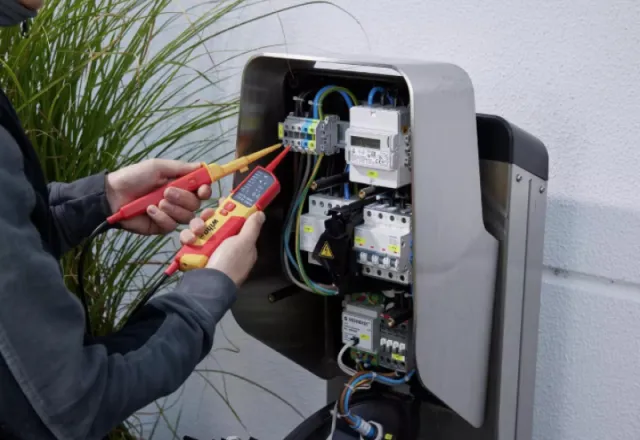
- Measure at the motor terminals, under load. The voltage at the main switchboard may look balanced while a loose connection in the starter or terminal box creates unbalance only at the motor. No-load readings can hide the problem.
- Measure line-to-line voltages. The NEMA calculation uses line-to-line voltages. Line-to-neutral voltages include neutral effects that delta-connected or ungrounded-wye motors don’t see.
- Use a true RMS instrument with a suitable measurement category, and if the motor is fed by a variable frequency drive, measure on the supply side: the PWM output needs different instruments and criteria.
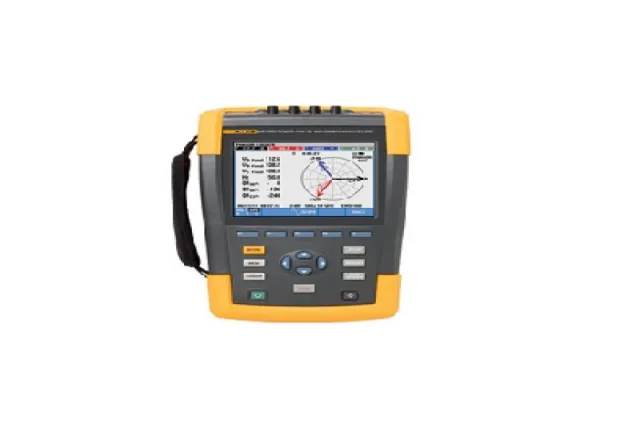
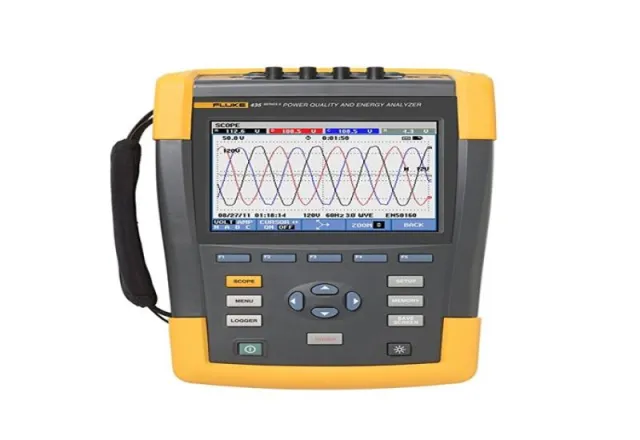
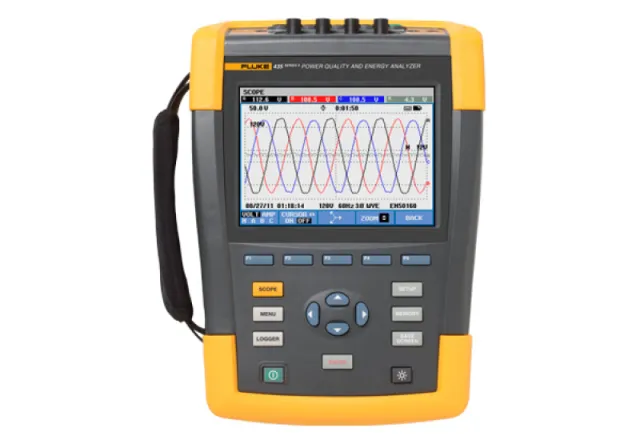
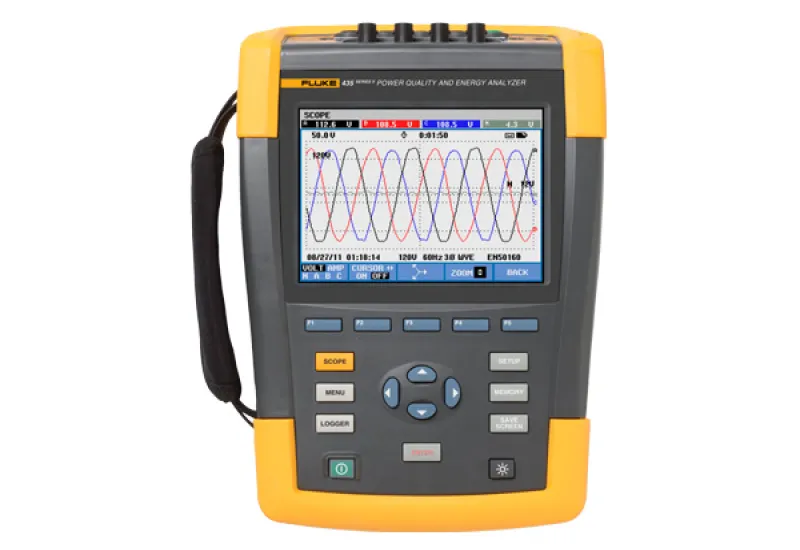
- Record over time. Three spot readings show a single moment. Unbalance changes with the time of day and with the plant’s single-phase loads. A recording of several days with a power quality analyzer shows the real behavior and calculates symmetrical-component unbalance automatically.
- Measure the currents too. Current unbalance is what actually heats the motor, and comparing it with voltage unbalance helps locate the cause.
Working on energized equipment requires the personal protective equipment and procedures set out in NOM-029-STPS and NFPA 70E.
Most common causes
| Origin | Typical causes |
|---|---|
| Plant installation | Single-phase loads (lighting, welders, office equipment) poorly distributed across phases; conductors of different size or length |
| Connections | Loose or oxidized terminals, worn starter contacts, fuses with poor contact |
| Compensation equipment | A blown fuse in a power factor correction capacitor bank leaves one phase with less compensation |
| Transformers | Banks of single-phase transformers with different taps or impedances, open-delta connections |
| Utility supply | Unbalance arriving from the utility network |
| Motor | Windings with shorted turns, faulty internal connections or resistance differences between phases |
Is the problem in the supply or in the motor?
When the currents are unbalanced, a practical technique is to roll the motor leads: with the equipment de-energized and locked out, move all three conductors one position (L1 to T2, L2 to T3, L3 to T1, which keeps the direction of rotation) and repeat the current measurement. If the high current stays on the same supply line, the problem is in the supply or the installation. If the high current moves with the motor terminal, the problem is in the motor or its cable.
In the second case, measure the resistance of each winding with a micro-ohmmeter or low-resistance ohmmeter and compare the three phases with each other, and also check the insulation resistance of the cables and windings. Resistance differences between phases point to poor internal connections or shorted turns.
How to correct it
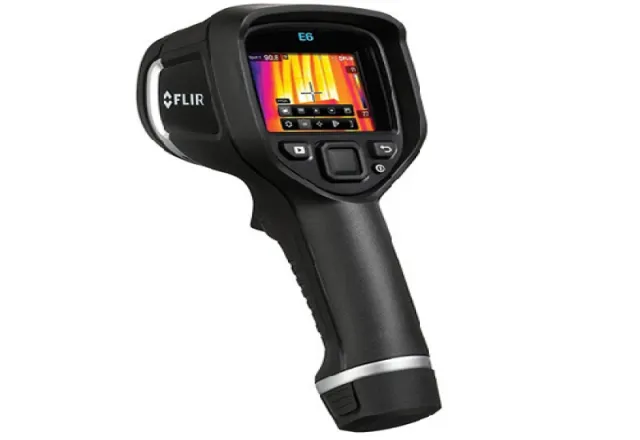
- Retighten and clean connections in panels, starters and terminal boxes, ideally guided by an infrared inspection that shows the hot spots.
- Redistribute single-phase loads to balance the current in each phase.
- Check the fuses and cells of capacitor banks.
- If the unbalance comes from the utility, document the power quality recording and present it to the utility.
- Until it is corrected, derate the motor according to the NEMA MG 1 curve and set the protection based on the current in the highest phase.
Frequently asked questions
How much unbalance is acceptable?
As a reference, NEMA MG 1 allows operation at rated output up to 1% voltage unbalance, with derating above that value, and does not recommend operation above 5%. Many plants set an internal target of 1% or less at the terminals of critical motors.
Does a variable frequency drive eliminate unbalance?
The drive delivers a balanced output to the motor, but unbalance at its input increases DC bus ripple and the current in some of the rectifier diodes. That’s why supply quality also matters for drive-fed motors.
How we can help
At CreativeIT Group we carry out three-phase analysis of your installation and on-site power quality recordings, as well as insulation and resistance testing of motors in Monterrey and Puebla. See all our electrical services and contact us to find the source of the unbalance before it costs you a motor.