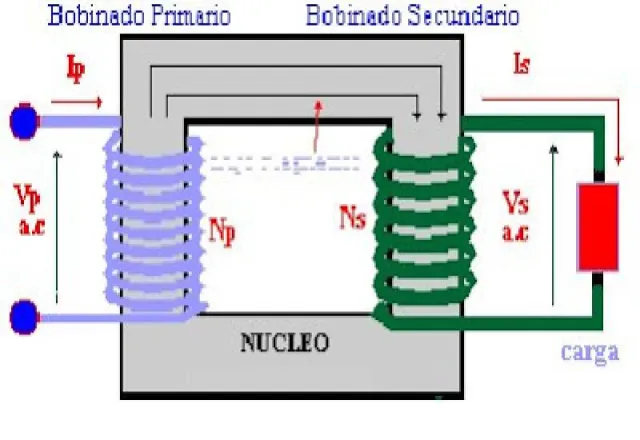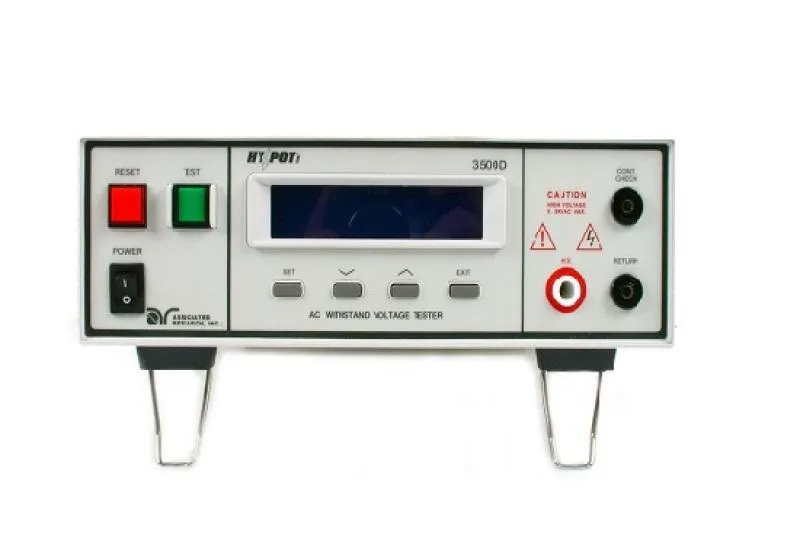
The hipot test, also called the dielectric withstand or applied voltage test, is one of the most important safety checks for any manufacturer of electrical equipment: switchboards, power supplies, appliances, chargers, laboratory instruments or machinery. It applies a voltage far above the operating voltage between live parts and accessible metal parts, to prove that the insulation holds without breaking down or passing excessive current. Done properly, it catches defects a multimeter would never see: insufficient clearances, pinched conductors, burrs, contamination or a poorly insulated transformer. Done badly, it can pass dangerous units or damage good ones. This guide explains how to set it up on a production line or in a quality lab.
What a hipot test really verifies
The goal is not to measure how much insulation the product has, but to show that it has margin. In service, insulation sees transient overvoltages from switching, lightning or grid faults. If it withstands a high, controlled voltage during the test, it is reasonable to expect it to withstand those events. The test is pass/fail: the unit fails if breakdown (arcing) occurs or if leakage current exceeds the set limit.
It is worth separating it from two other tests it is often confused with:
- Insulation resistance. A DC voltage, usually lower, is applied and resistance is measured in megohms. It gives a number that is useful for trending, but it does not stress the insulation in the same way.
- Ground bond or ground continuity. A relatively high current is passed through the protective earth conductor and its resistance is measured. It verifies that, in a fault, the enclosure would actually be earthed.
The three complement each other. Many production test programs run them in sequence: ground bond first, then hipot and, depending on the product, insulation resistance or functional tests.
Which standard applies
Test voltage, time and acceptance criteria are not a matter of personal choice: they come from the product safety standard. Some common examples:
- IEC 61010-1: electrical equipment for measurement, control and laboratory use.
- IEC 60335-1: household and similar electrical appliances.
- IEC 62368-1: audio, video and information technology equipment, which replaced IEC 60950-1 and IEC 60065.
- IEC 60601-1: medical electrical equipment.
- IEC 60204-1: electrical equipment of machines.
Within each standard, the voltage depends on the working voltage, the type of insulation (basic, supplementary or reinforced) and the overvoltage category. An old rule of thumb, “twice the working voltage plus 1000 V”, is still quoted, but it does not replace the table in the standard that applies to your product. If you export, also check which edition of the standard the certification body or customer requires.
AC or DC: how to choose
| Aspect | AC hipot | DC hipot |
|---|---|---|
| Stress on the insulation | Similar to operation, both polarities | Single polarity |
| Current measured | Total: capacitive plus resistive | Mainly resistive, once the capacitance is charged |
| High-capacitance units (EMI filters, long cables) | Capacitive current can cause false failures | Better suited, if the standard allows it |
| Discharge at the end | Not usually required | Mandatory: the unit is left charged |
When the standard accepts a DC test, the equivalent voltage is usually expressed as the peak value of the AC voltage, that is, roughly 1.414 times the RMS value. Always confirm that factor in the relevant standard.
How to configure the test
Ramp, dwell and ramp-down
Voltage should not be applied all at once. A controlled ramp-up avoids transients and, in DC, limits the charging current that could be read as a failure. Then comes the dwell time at full voltage and, finally, a ramp-down. Type tests commonly specify one minute of dwell; several standards allow shorter times in production, sometimes at a slightly higher voltage. Check which combination yours accepts.
Leakage current limit
This is the setting behind most mistakes. If the limit is too high, deteriorated insulation will pass; if it is too low, the normal capacitive current of a good unit will cause rejects. A sound practice is to measure several known-good units, document the typical current and set the limit with margin above it, but well below the current that would indicate a fault. Many testers also offer a low limit: if the current is close to zero, the unit is probably not connected and the test is not valid.
Arc detection
Some testers detect brief high-frequency discharges that do not raise the average current enough to trip the limit. They point to marginal clearances or contamination. Set the sensitivity carefully so you do not reject on noise.
Preparing the unit under test
- Tie all line and neutral conductors together so the whole primary circuit is at the same potential.
- Set the unit’s switches to the on position so the voltage reaches all of the insulation.
- Some components, such as surge suppressors or line-to-earth capacitors, may conduct or be damaged during the test. The standard states whether they may be disconnected and under what conditions.
Operator safety
A hipot tester produces several kilovolts. Even with the current limited, the hazard is real. Minimum practices include:
- A defined test area, preferably with interlocks that cut the high voltage when a guard is opened.
- Suitable test accessories, with leads and probes in good condition and rated for the voltage.
- No touching the unit during the test or right after a DC test, until discharge is confirmed.
- Trained, authorized staff, within the plant’s electrical safety program, in line with NOM-029-STPS and the NFPA 70E safe work practices where they are adopted.
- An insulating work surface with no metal objects around the unit under test.
Verify the tester before trusting it
A tester that fails to detect faults is worse than no tester, because it gives false confidence. Good practice is to run a fail check at the start of each shift with a reference device or resistor that must cause a reject, and a pass check with a load that must pass. Record the result. The tester should also be calibrated with traceability for voltage, current and time, at the interval set by your quality system.
Common mistakes
- Repeating the test many times at full voltage on the same unit. Accumulated stress can degrade the insulation; several standards call for a reduced voltage on repeat tests.
- Using a leakage limit copied from another product with different capacitance.
- Skipping the ground bond test: a unit can pass hipot with its protective earth conductor disconnected.
- Not recording the serial number, voltage, time and result for each unit, which is the evidence an audit will ask for.
Renting or buying the tester
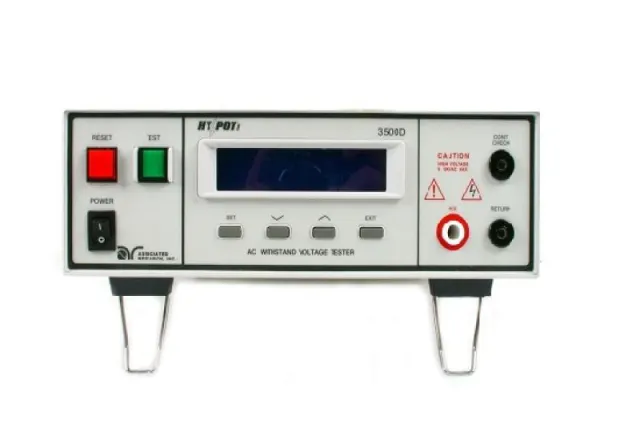
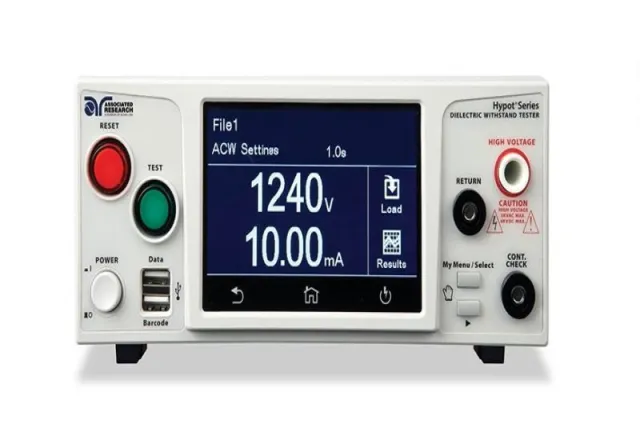
If the test is part of daily production, owning a tester integrated into the process makes sense. To validate a prototype, prepare for certification, handle an audit or cover a unit out for calibration, renting is more practical. Before choosing, define the maximum voltage, whether you need AC, DC or both, the current resolution your leakage limit requires and whether you need ground bond testing in the same instrument.
How CreativeIT can help
At CreativeIT Group we offer hipot tester rental for electrical equipment, including the Associated Research 3865 5 kV hipot, as well as electrical safety and functional performance assessments and insulation resistance testing. We help you define the right test sequence for your product. Contact us at (81) 4777 6921 or info@creativeit.mx.