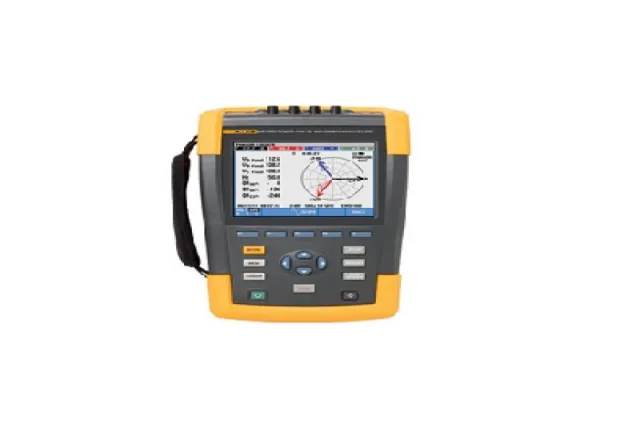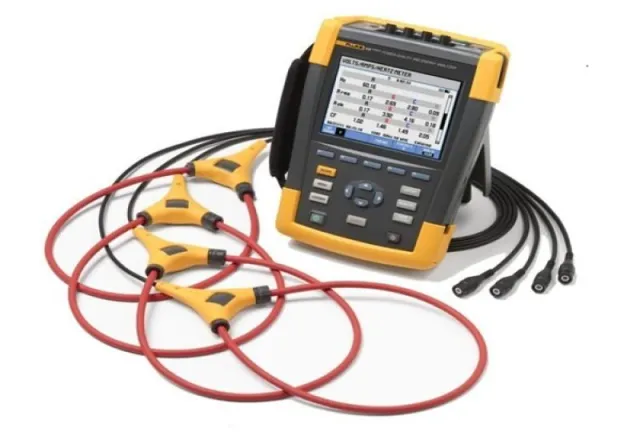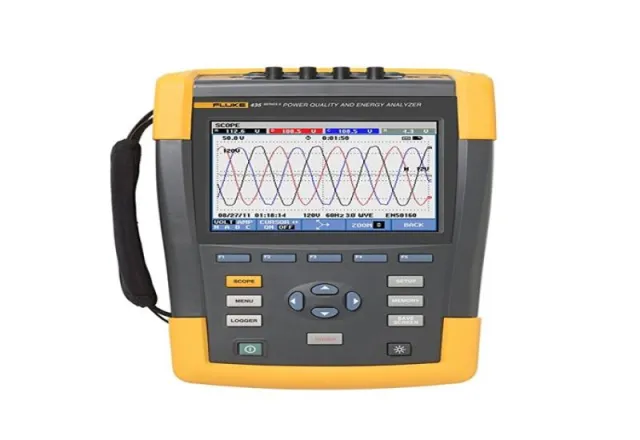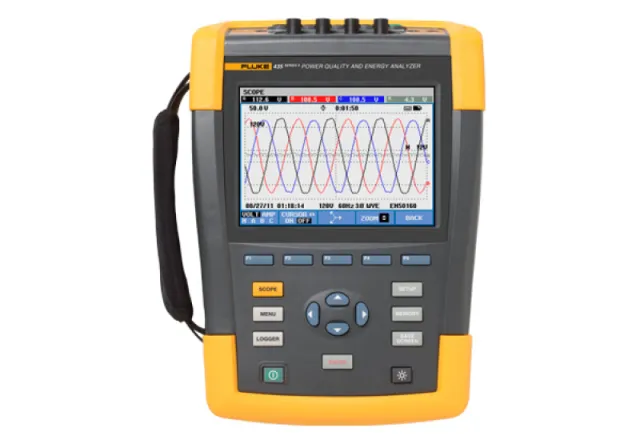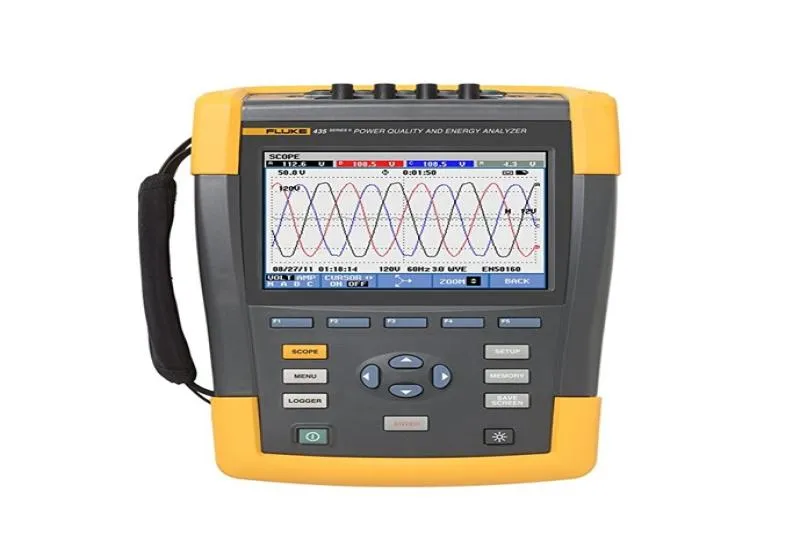
A power quality analyzer can cost anywhere from the price of a good multimeter to the price of a vehicle, and the difference is not always visible on the data sheet. Two instruments can both show “harmonics”, “flicker” and “unbalance” on screen and still deliver results that do not agree, because they do not measure the same way. Whether the goal is to diagnose drive trips, check compliance with Mexico’s Grid Code (Código de Red) or support a claim with the utility, choosing the right instrument is as important as knowing how to install it. This guide explains what the IEC 61000-4-30 measurement class means, what to check in channels, current sensors and logging, and when to buy or rent.
First: what problem are you solving?
Before comparing models, define the main use. Requirements vary widely:
- Troubleshooting: finding the cause of trips, transformer overheating or electronic equipment failures. Event capture, waveforms and ease of use in the field matter most.
- Compliance studies: measurements compared with limits in a standard or contractual requirement, such as the Grid Code, IEEE 519 or EN 50160. Here the measurement class and traceable calibration are decisive.
- Energy balance and efficiency: power, energy, power factor and load profiles for savings or sizing projects.
- Permanent monitoring: a fixed panel-mounted meter is usually a better choice than a portable analyzer left installed for months.
Class A and Class S under IEC 61000-4-30
IEC 61000-4-30 defines the measurement methods for power quality parameters: frequency, voltage magnitude, flicker, harmonics and interharmonics, unbalance, dips, swells and interruptions, among others. For each parameter it sets the algorithm, the aggregation intervals and the permitted uncertainty.
| Class | Typical use | What it means |
|---|---|---|
| A | Regulatory compliance, contractual measurements, comparison between instruments | Precisely defined methods and accuracy; two correctly installed Class A instruments should give comparable results. Requires time synchronization. |
| S | Statistical surveys, troubleshooting, quality assessments | Defined methods but less stringent accuracy and processing requirements. |
Earlier editions of the standard also included a Class B; instruments that still declare it, or declare no class at all, use the manufacturer’s own methods. They can be useful for troubleshooting, but their results are not directly comparable with those of a Class A instrument.
One important detail: “Class A” must apply to each parameter. Check the manufacturer’s declaration of conformity and, if available, verification to IEC 62586-2, which defines the functional tests used to confirm that an instrument actually meets IEC 61000-4-30. Harmonics are measured according to IEC 61000-4-7 and flicker according to IEC 61000-4-15, both referenced by IEC 61000-4-30.
Data aggregation: why it matters
A Class A instrument measures over basic intervals of 10 cycles on 50 Hz systems or 12 cycles on 60 Hz systems (about 200 ms) and aggregates them into 150/180-cycle, 10-minute and 2-hour intervals. The limits in many standards, including those for harmonics and voltage, are expressed on 10-minute aggregated values and weekly percentiles. If the instrument does not aggregate the same way, the report may not be comparable with the requirement.
Channels and connection
- Voltage: at least four channels (three phases and neutral) for three-phase four-wire systems. Some instruments add a fifth channel for neutral-to-ground voltage, useful when investigating problems with electronic equipment.
- Current: four channels so neutral current is also measured, which can be significant with loads rich in triplen harmonics.
- Connection configurations: check support for wye, delta, open delta, single-phase and split-phase systems, and for measurement through potential and current transformers with configurable ratios.
- Measurement category: under IEC 61010, the instrument and its accessories must carry the right category and voltage for the connection point, for example CAT IV at the origin of the installation and CAT III at distribution panels. The rating of the whole setup is that of its lowest-rated accessory.
Current sensors: half of the accuracy
The accuracy of the complete system depends on both the analyzer and the sensors. A poorly chosen sensor can ruin the measurement of a Class A instrument.
- Flexible Rogowski probes: lightweight, fit around bus bars or bundles of large cables and cover wide AC current ranges. They do not measure DC, and their accuracy at low currents and sensitivity to conductor position should be checked.
- Iron-core current transformer clamps: better accuracy and lower phase error at small and medium currents, useful for power and energy measurement.
- AC/DC Hall-effect clamps: needed when there is a DC component, for example in photovoltaic systems, chargers or drives.
For each sensor, check the range, accuracy, phase error and frequency response if you care about high-order harmonics. Ask whether the sensor is calibrated together with the analyzer or separately.
Events, transients and waveforms
For troubleshooting, the ability to record events with their waveform and half-cycle RMS values is as useful as trends. Check the configurable thresholds, how many cycles are recorded before and after the event, and the sampling rate. Capturing fast transients, such as those caused by switching or lightning, requires sampling rates far higher than those needed for harmonics; not every instrument offers it.
Logging, software and reports
- Enough memory for at least a full week of logging with the parameters you need, since many requirements are evaluated over weekly periods.
- Battery backup that keeps logging during outages, exactly when events matter.
- Software that produces reports against the applicable standard and exports data in open formats.
- GPS or network time synchronization when comparing measurements from several points.
- Ingress protection and operating temperature suitable for leaving it installed in an electrical room or outdoors.
Buy or rent?
If studies are occasional, for example a measurement before and after installing a capacitor bank or a harmonic filter, renting a Class A instrument with its sensors is usually more sensible than buying one. If your plant has several load centers, measures regularly or has staff trained to interpret the results, owning an instrument lets you react quickly to a problem. Either way, ask for the instrument to have a current, traceable calibration.
How CreativeIT can help
At CreativeIT Group we offer power quality analyzer rental, three-phase power quality analyzers for sale, Rogowski probe rental and a three-phase analysis service carried out by our staff. Contact us at +52 (81) 4777 6921 or info@creativeit.mx, tell us what problem you need to solve and we will help you choose the right equipment.