An arc flash releases a huge amount of energy as heat, light, pressure and molten metal in a matter of milliseconds. For anyone working in front of an energized panel, the difference between a minor burn and a serious injury depends largely on whether the clothing and protective equipment are rated for the energy that could be released at that point. Choosing an arc flash suit “because it is the thickest” or using the same gear for every task is not enough. This guide explains how the level of protection is determined under NFPA 70E, what PPE categories and cal/cm² ratings mean, and what to check when you buy or rent arc flash protective equipment.
Why protection starts before the suit
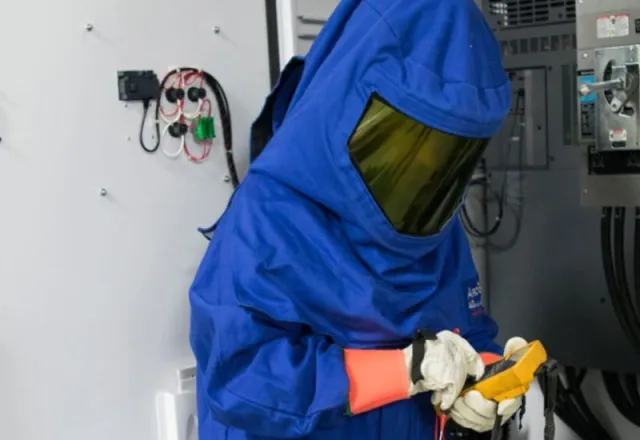
NFPA 70E and Mexico’s NOM-029-STPS share the same principle: the first option is to work on de-energized equipment in an electrically safe work condition (lockout, tagout and verification of the absence of voltage). Personal protective equipment is the last barrier in the hierarchy of controls, not the first. Even so, some tasks involve unavoidable exposure, such as the absence-of-voltage test itself, measurements on energized equipment or operating breakers under certain conditions, and these require an arc flash risk assessment.
Two methods for selecting PPE under NFPA 70E
NFPA 70E lets you select protection by one of two methods, but you must not mix them for the same equipment:
- Incident energy analysis method: an arc flash study calculates the expected incident energy at the working distance, normally using the IEEE 1584 model. The result, in cal/cm², is compared directly with the rating of the protective equipment. It is the most accurate method and its result should appear on the equipment label.
- Arc flash PPE category method: uses the standard’s tables, which assign a category based on the type of equipment, its voltage and the table’s conditions (available fault current and maximum fault clearing time of the protective device). It is only valid if the equipment meets those conditions; if the fault current or clearing time falls outside the table parameters, an incident energy analysis is required.
PPE categories and minimum ratings
NFPA 70E PPE categories set a minimum arc rating for clothing and equipment:
| PPE category | Minimum arc rating | Typical equipment |
|---|---|---|
| 1 | 4 cal/cm² | Arc-rated shirt and pants or coverall, face shield or hood, hearing protection, gloves |
| 2 | 8 cal/cm² | As category 1, with an appropriately rated face shield and head/neck protection, or a suit hood |
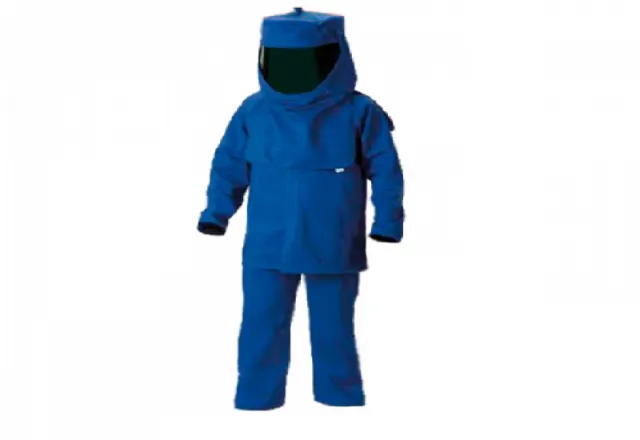
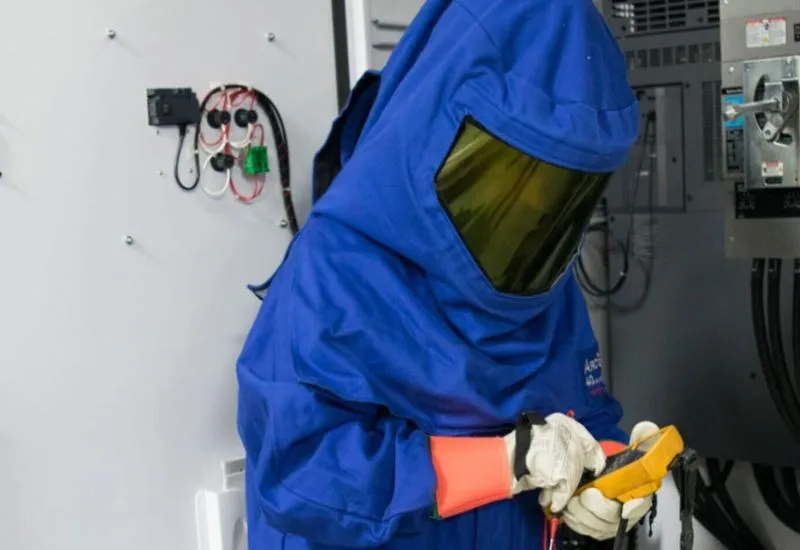
| 3 | 25 cal/cm² | Arc flash suit with jacket, pants and hood |
| 4 | 40 cal/cm² | High-rated arc flash suit with hood |
The full tables in the standard also specify the hard hat, safety glasses, footwear and gloves for each category. Check the NFPA 70E edition your company applies, because requirements have been adjusted between editions.
What the cal/cm² rating means
A garment’s arc rating is determined in the laboratory using ASTM F1959 and is expressed as ATPV or EBT, depending on the material’s behavior in the test. It indicates the incident energy the garment can receive with a low probability that the skin underneath will suffer a second-degree burn. Two practical rules:
- The rating must be equal to or greater than the calculated incident energy. A 31 cal/cm² suit is suitable for a point with 20 cal/cm², but not for one with 35 cal/cm², even though it is “a high-category suit”.
- In multilayer systems, the rating of the whole system is what counts. The ratings of the individual garments are not added together; the manufacturer must state the rating of the system tested as a whole.
The arc flash boundary is the distance at which incident energy falls to 1.2 cal/cm², the approximate threshold for a second-degree burn. Anyone inside that boundary must wear arc-rated PPE.
Components of the protective equipment
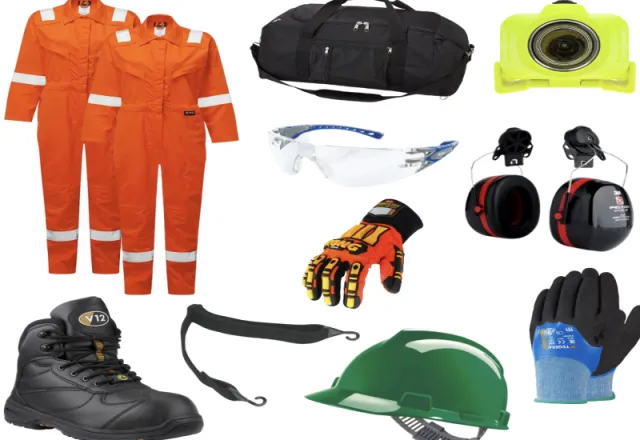
- Outer clothing: arc-rated shirt, pants, coverall or suit that complies with ASTM F1506 or equivalent. It must cover arms and legs completely, be fastened and have sleeves rolled down.
- Under layers: non-melting natural fibers (cotton, wool) or flame-resistant material. Avoid polyester, nylon and other synthetics that melt and stick to the skin, including underwear.
- Head and face: arc-rated face shield with chin protection or, at higher categories, a hood with a viewing window. Underneath, a dielectric hard hat and safety glasses.
- Hearing protection: ear canal inserts; an arc blast produces sound pressure levels that can damage hearing.
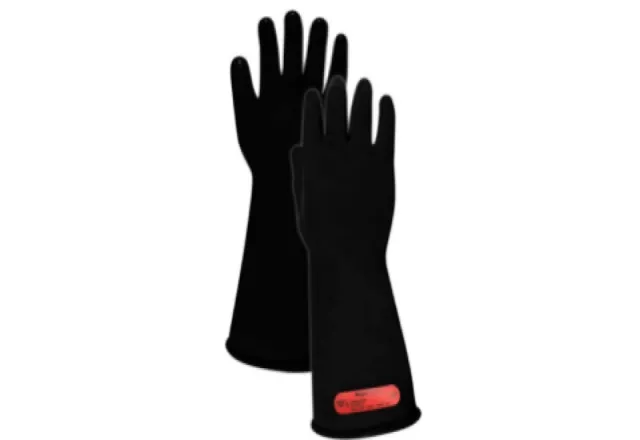
- Hands: arc-rated gloves or, where there is also a shock hazard, rubber insulating gloves of the appropriate class with leather protectors.
- Footwear: leather, with dielectric properties when the assessment requires it.
Common mistakes
- Wearing ordinary cotton or poly-cotton blends in the belief that they are “safe workwear”.
- Choosing PPE by category for a panel whose study shows higher energy than the table assumes.
- Skipping the hood or face shield because it “fogs up” or is “uncomfortable”, or exposing the face by lifting the shield to read an instrument.
- Carrying metal objects, phones or synthetic garments under the suit.
- Washing or repairing garments without following the manufacturer’s instructions; fabric softener, bleach or an improper repair can reduce performance.
- Continuing to use garments contaminated with oil, solvents or other flammable materials, or with tears and visible wear.
What to check when buying or renting an arc flash suit
- The incident energy of your equipment. Ideally you have an arc flash study and labels on every panel. Without that figure, choosing a suit is guesswork.
- The arc rating on the garment label and the standard it was tested to, plus the correct size: a suit that is too tight or too loose reduces protection and mobility.
- Visibility through the face window and, where relevant, hood ventilation for long tasks.
- Compatibility with the rest of the PPE: hard hat, insulating gloves and hearing protection.
- For rented equipment, ask for it to be clean, inspected and undamaged, and inspect the garment yourself before each use.
Renting a high-rated suit can make sense for infrequent tasks such as an annual substation shutdown. For staff who are exposed regularly, owning properly sized equipment makes correct use and condition control easier.
How CreativeIT can help
At CreativeIT Group we offer arc flash suits for sale, 31 cal/cm² arc flash suit rental, insulating rubber gloves and personal protective equipment kits for your maintenance staff. Contact us at +52 (81) 4777 6921 or info@creativeit.mx and tell us the incident energy of your panels so we can help you choose the right equipment.