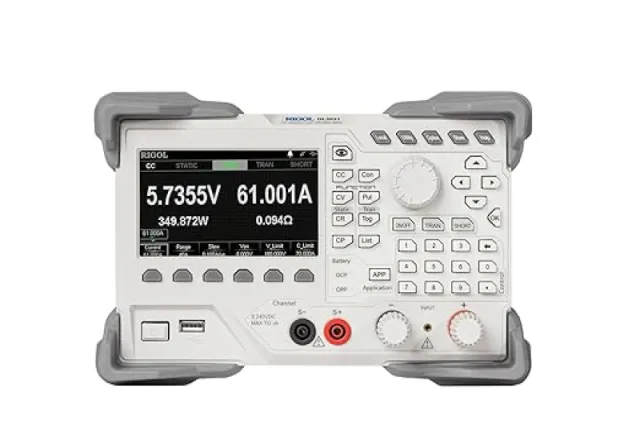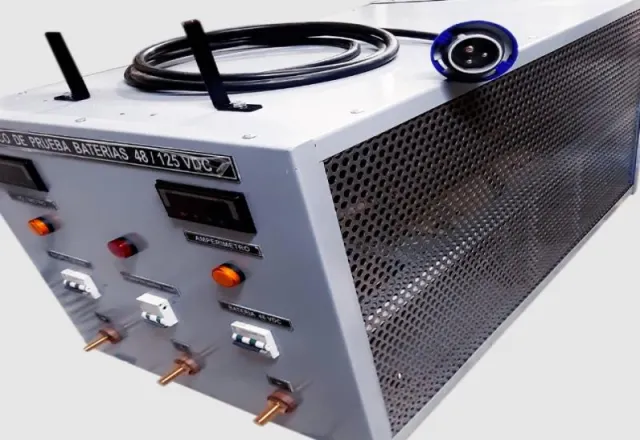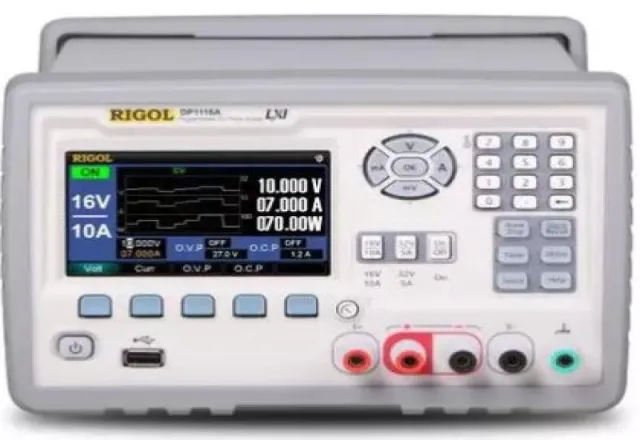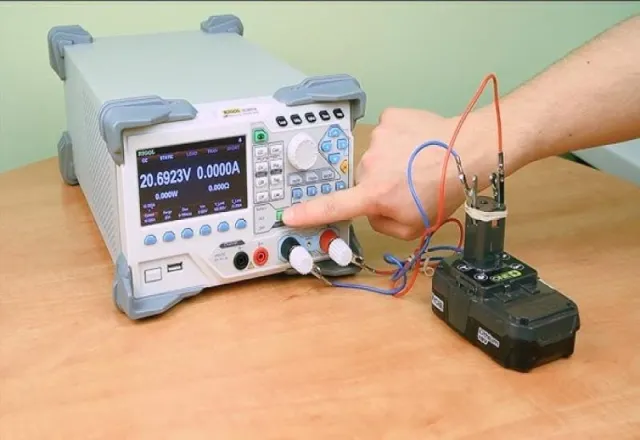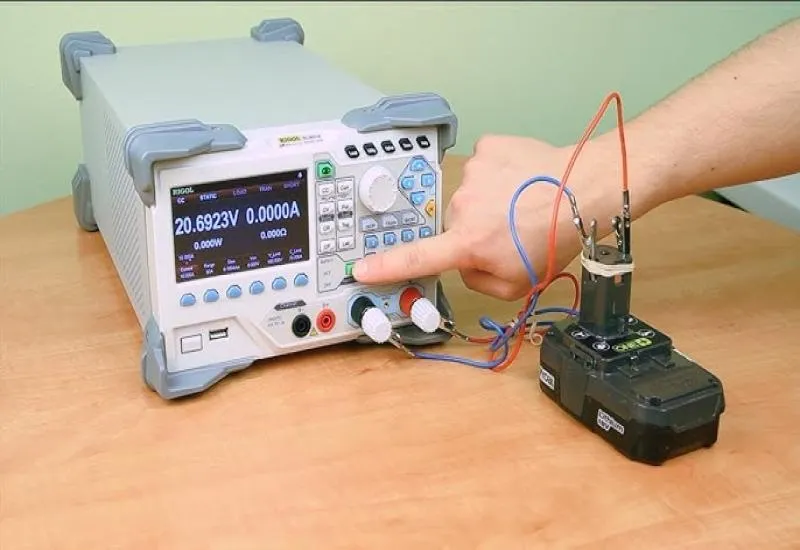
A DC electronic load is the natural counterpart of a power supply: instead of delivering energy, it absorbs it in a controlled way. It is used to test power supplies and converters, discharge batteries, validate fuel cells and solar panels, or verify chargers and protection circuits. Choosing one is not as simple as comparing watts: the minimum operating voltage, the power envelope, the response speed and the way it is connected decide whether the test will be reliable. This guide explains the operating modes, the specifications that really matter and the most common mistakes when using an electronic load.
Operating modes
Almost all electronic loads offer four basic modes. Choosing the right one depends on what you want to simulate:
| Mode | What it holds constant | Typical use |
|---|---|---|
| CC (constant current) | The current drawn | Power supply load regulation, battery discharge at fixed current |
| CV (constant voltage) | The voltage at its terminals | Simulating a battery when testing chargers; power supply current-limit tests |
| CR (constant resistance) | The voltage/current ratio | Simulating a resistive load, such as a heater or an incandescent lamp |
| CP (constant power) | The power absorbed | Simulating DC-DC converters or inverters, which draw more current as voltage falls |
Many models also include a dynamic or transient mode, which switches between two current levels with adjustable timing and slew rate; sequences or lists to reproduce consumption profiles; and automatic functions such as battery discharge tests with a cut-off voltage and capacity calculation, or tests of a supply’s overcurrent and overpower protection.
Specifications to check
Voltage, current and power: the operating envelope
A 600 W, 150 V, 60 A load cannot draw 60 A at 150 V: that would be 9 kW. Its operating area is limited at the same time by maximum voltage, maximum current and maximum power. Before buying, plot the operating points of your test (for example, maximum current at the supply’s rated voltage) and check that they fall inside that envelope. Also check whether rated power is derated with ambient temperature; this information appears in the datasheet.
Minimum operating voltage
This is the specification that causes the most surprises. The load uses transistors to sink current, and they need a minimum voltage across their terminals to conduct full current. Below that voltage, the maximum available current drops. If you will test individual battery cells, fuel cells, supplies of 1 V or less, or high-current low-voltage rails, check in the datasheet from what voltage rated current is guaranteed. There are loads designed to operate at very low voltages, even close to zero, usually with the help of an auxiliary supply in series.
Response speed
To measure the transient response of a supply or regulator, the load must change current faster than the control loop under test. Check the maximum slew rate (in A/µs), the minimum rise time and the maximum frequency of the dynamic mode. Keep in mind that cable inductance limits the real speed: a high datasheet figure is only achieved with short, well-routed cables.
Accuracy and resolution
Distinguish between programming accuracy (how close the real value is to the one you set) and readback accuracy (how well it measures voltage and current). Both are usually expressed as a percentage of reading plus a percentage of range. If the load has several current ranges, use the lowest one that covers your test to get better resolution.
Connectivity and expansion
For automated testing, check the available interfaces (USB, LAN, GPIB, RS-232) and compatibility with SCPI commands or your software. If you will need more power in the future, confirm whether the model supports parallel connection with master-slave control; series connection usually has restrictions, so check the manufacturer’s manual.
Regenerative loads
A conventional load turns all the energy it absorbs into heat. For high power or long-duration tests, such as power supply burn-in or discharging battery banks, there are regenerative loads that return the energy to the grid. They reduce heat in the lab and energy consumption, although their initial cost is higher and their grid connection must be evaluated.
Good connection practice
- Use remote sensing. Connect the sense terminals directly at the device under test. The load then regulates and measures the real voltage at that point, not the voltage reduced by the drop in the cables.
- Short, heavy, twisted cables. They reduce voltage drop and inductance, which improves transient tests and prevents oscillation.
- Respect polarity and maximum voltage. Connecting a source with reversed polarity or with a voltage above the load’s maximum can damage the power stages. Set the internal protections before connecting.
- Watch stability in CV mode. When a supply in CV mode feeds a load that is also in CV mode, the two control loops can interfere with each other. If you see oscillation, check the modes of both instruments and the configured response speed.
- Ventilation. Keep air inlets and outlets clear. A load working near its maximum power dissipates all that heat into the room.
- Controlled start. Many loads let you set a turn-on voltage (Von) so they draw no current until the supply reaches a defined level; this prevents the supply from starting up in current limit.
Common industrial applications
- Load regulation, ripple and transient response tests of DC power supplies and converters.
- Battery capacity tests, from small cells to industrial banks, logging voltage during discharge.
- Validation of chargers, CNC power modules and repaired electronic boards before reinstalling them.
- Current-voltage curves of solar panels and fuel cells.
Buy or rent
For a development lab or a test line with daily use, buying is usually the most convenient option. For a one-off validation, a supplier audit or an occasional battery discharge test, it is worth evaluating the total cost of each alternative. In both cases, first define the voltages, currents and power of your worst case, the minimum voltage it must operate at and the response speed your test requires.
How CreativeIT can help
At CreativeIT Group in Monterrey we offer DC electronic loads and electronic load testers, as well as power supplies and other equipment in our signal generators and power supplies line. We help you choose the right model for your application. Contact us at (81) 4777 6921 or info@creativeit.mx.