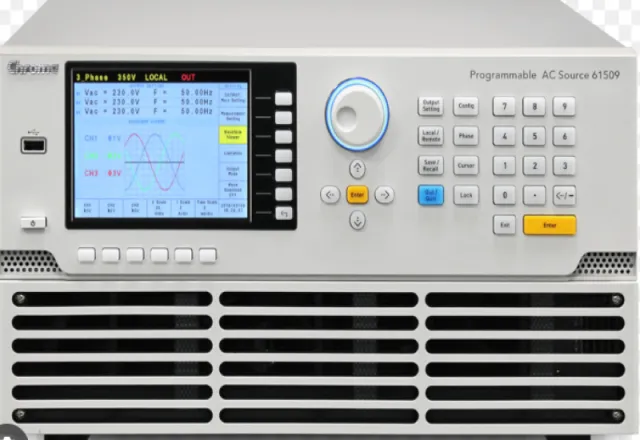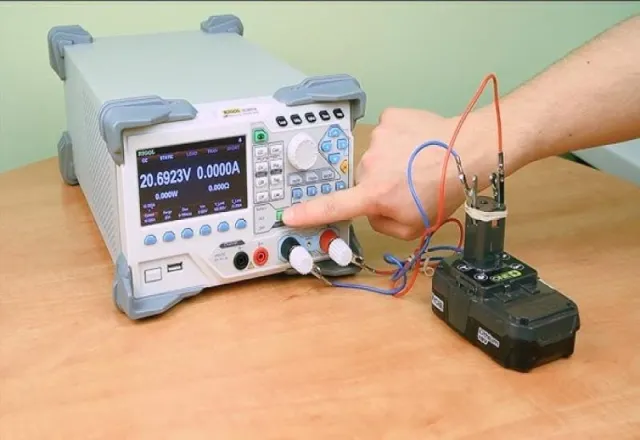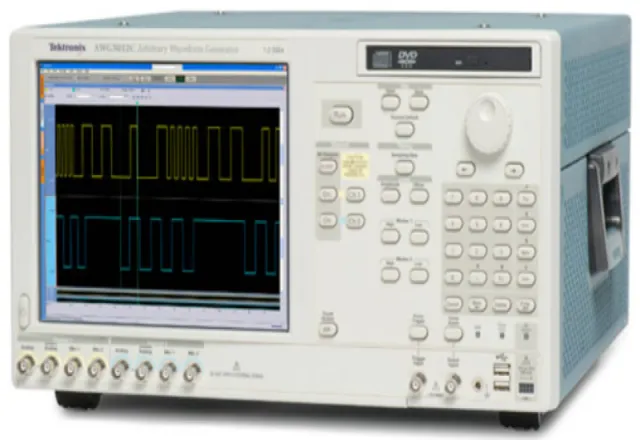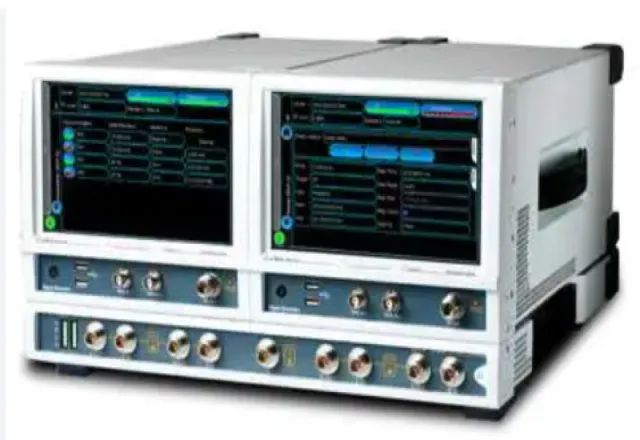
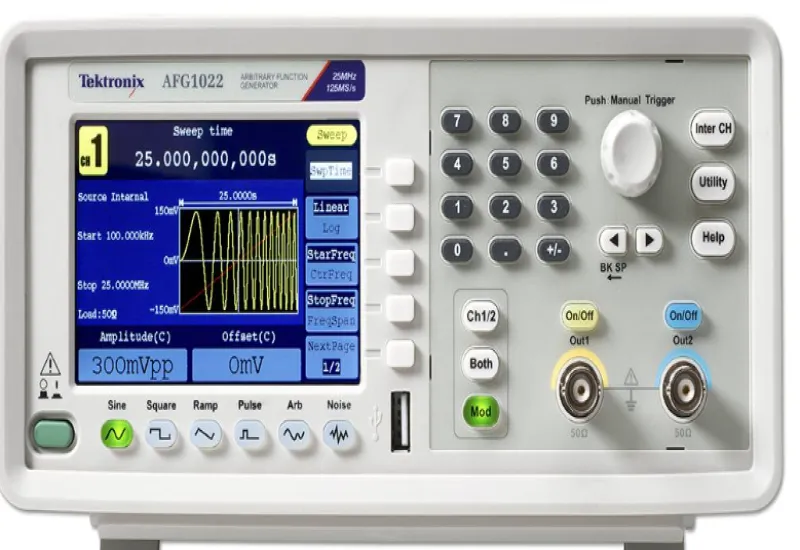
We have function generators for sine, square, triangle and sawtooth waves, typical for any job where a signal must be generated at specific levels.
The AFG offers unique strengths: it produces stable waveforms in standard shapes such as sine, square, pulse, triangle and others. It also allows users to generate so-called arbitrary waveforms with a user-defined shape. In addition, AFGs offer a way to modulate the signal from internal or external sources, and to generate frequency sweeps or bursts of the output signal.
Waveforms can be created in several ways, and the choice depends on the information available about the device under test and its input requirements, whether distortion or error signals need to be added, and other variables.
An AFG gives users a means to:
Create: Customer-defined signals for circuit stimulus and testing.
Replicate: synthesize a real-world signal that is not available in the electronics lab (previously captured from an oscilloscope).
Generate: ideal or stressed reference signals for industry standards with specific tolerances.
Embedded and semiconductor test applications
Clock source
TYPICAL APPLICATION
Frequency margin: operating range of clock frequency for digital circuit testing. Substitute the unavailable clock source for functional testing of the device.
USERS
Electronic design and test engineers developing integrated circuits and digital communication.
BENEFITS OF USING AN ARBITRARY FUNCTION GENERATOR
Cost savings compared with dedicated pulse generators.
Dual channels and floating outputs to generate differential signals.
Pulse and square frequency range up to 160 MHz.
BENEFITS OF USING A FUNCTION GENERATOR.
Dual channels.
ARBITRARY SIGNALS
Ease of use.
Compact form factor.
TIPS
Typical application pulse width modulation to generate clock signals with a precise amount of jitter to stimulate the PLL to measure its jitter tolerance and jitter transfer function.
LIV curves
Recommended AFG: Tektronix AFG31252.
Operational amplifier characterization
TYPICAL APPLICATION
Measure the phase shift, gain, overshoot and slew rate performance of operational amplifiers and buffer circuits.
USERS
Electronics design and test engineers working for semiconductor manufacturers who develop operational amplifiers.
BENEFITS OF USING AN ARBITRARY FUNCTION GENERATOR
Dual channels and floating outputs to generate differential signals.
Ease of use, compact form factor.
TIPS
To generate a differential signal, set the waveform, frequency and amplitude on Channel 1 and duplicate the inverted settings on Channel 2 through the CH1 Complement function. Then turn on sync mode by setting CH1=CH2 Frequency to On and starting Align Phase.
Because operational amplifiers can behave asymmetrically, that is, respond differently to the leading edge than to the trailing edge of an input pulse, the stimulus source must have independently adjustable rise and fall times.
The AFG offers unique strengths: it produces stable waveforms in standard shapes such as sine, square, pulse, triangle and others. It also allows users to generate so-called arbitrary waveforms with a user-defined shape. In addition, AFGs offer a way to modulate the signal from internal or external sources, and to generate frequency sweeps or bursts of the output signal.
Waveforms can be created in several ways, and the choice depends on the information available about the device under test and its input requirements, whether distortion or error signals need to be added, and other variables.
An AFG gives users a means to:
Create: Customer-defined signals for circuit stimulus and testing.
Replicate: synthesize a real-world signal that is not available in the electronics lab (previously captured from an oscilloscope).
Generate: ideal or stressed reference signals for industry standards with specific tolerances.
Embedded and semiconductor test applications
Clock source
TYPICAL APPLICATION
Frequency margin: operating range of clock frequency for digital circuit testing. Substitute the unavailable clock source for functional testing of the device.
USERS
Electronic design and test engineers developing integrated circuits and digital communication.
Cost savings compared with dedicated pulse generators.
Dual channels and floating outputs to generate differential signals.
Pulse and square frequency range up to 160 MHz.
Dual channels.
Ease of use.
Compact form factor.
TIPS
Typical application pulse width modulation to generate clock signals with a precise amount of jitter to stimulate the PLL to measure its jitter tolerance and jitter transfer function.
LIV curves
Recommended AFG: Tektronix AFG31252.
Operational amplifier characterization
TYPICAL APPLICATION
Measure the phase shift, gain, overshoot and slew rate performance of operational amplifiers and buffer circuits.
Useful for electronics design and test engineers working for semiconductor manufacturers who develop operational amplifiers.
Dual channels and floating outputs to generate differential signals.
Ease of use, compact form factor.
To generate a differential signal, set the waveform, frequency and amplitude on Channel 1 and duplicate the inverted settings on Channel 2 through the CH1 Complement function. Then turn on sync mode by setting CH1=CH2 Frequency to On and starting Align Phase.
Because operational amplifiers can behave asymmetrically, that is, respond differently to the leading edge than to the trailing edge of an input pulse, the stimulus source must have independently adjustable rise and fall times.