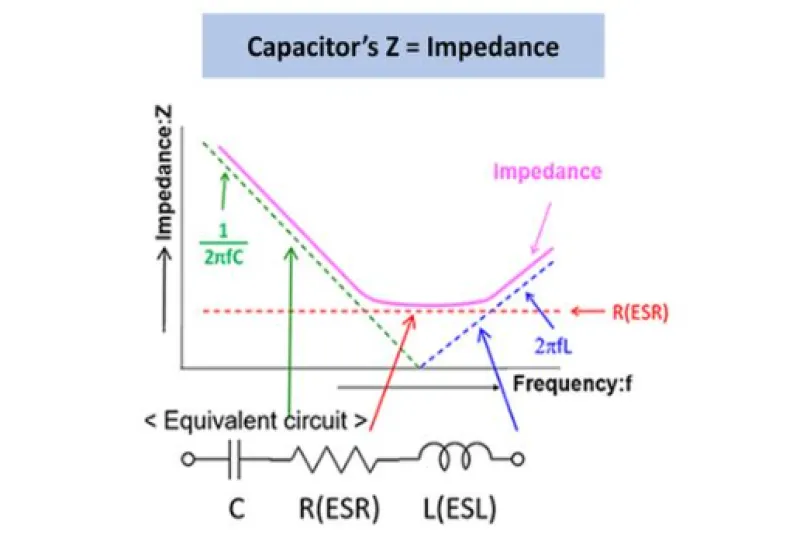
Electrical characterization of capacitors is a critical process in electronic design, EMC validation, power electronics and high-frequency applications. Although an ideal capacitor only stores energy, in practice parasitic parameters significantly alter its real behavior.
Among the most important are:
- ESR (Equivalent Series Resistance)
- ESL (Equivalent Series Inductance)
Measuring these parameters correctly requires high-precision techniques, especially Kelvin or 4-port (4-terminal pair) configurations.
Why Are 4-Port Measurements Important?
In conventional 2-terminal measurements, the resistance and inductance of cables, connectors and test leads add directly to the device measurement.
This causes considerable errors when evaluating:
- low-impedance capacitors
- ESR in milliohms
- RF behavior
- EMI filtering capacitors
- high-speed decoupling components
The 4-port technique physically separates:
- current injection lines
- voltage sensing lines
In this way, the voltage drop across cables and contacts does not affect the primary measurement.
Electrical Principle of Kelvin Measurement
Z=VIZ=frac{V}{I}Z=IV
The instrument injects a known current and measures the voltage directly across the component using independent high-impedance terminals.
This provides:
- higher accuracy
- reduced parasitic errors
- better repeatability
- reliable measurements in mΩ and nH
In impedance analyzers and precision LCR meters, this technique is essential for obtaining valid high-frequency data.
What Is Capacitor ESR?
ESR represents the effective internal resistance of the capacitor.
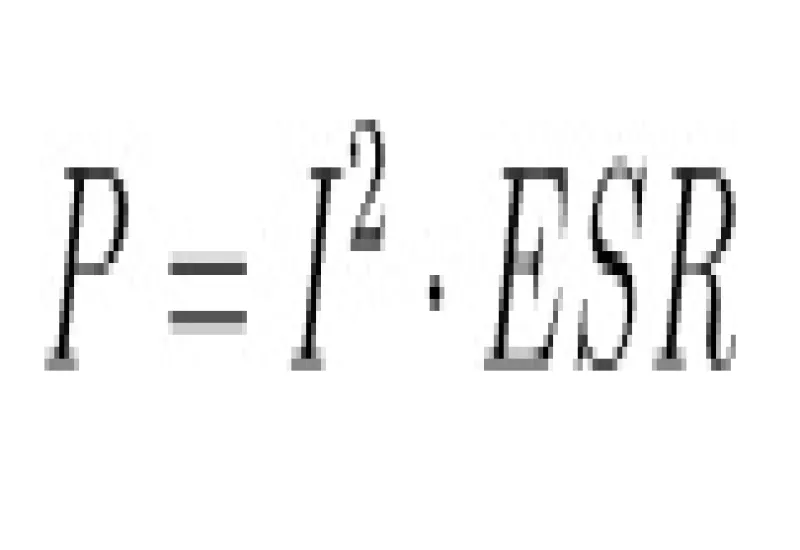
This parameter determines the component’s dissipative losses.
High ESR values cause:
- heating
- reduced efficiency
- degraded filtering
- higher ripple
- increased conducted noise
- shorter service life
In switching power supplies and DC-DC converters, high ESR can cause instability and EMC problems.
What Is ESL?
ESL is the equivalent parasitic inductance generated by:
- leads
- internal geometry
- PCB traces
- package
- physical connections
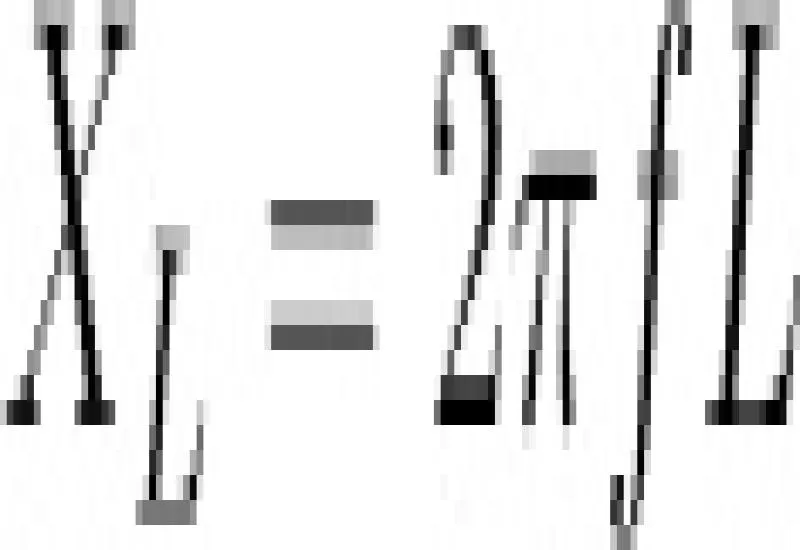
At high frequencies, ESL causes the capacitor to stop behaving as a capacitive element and begin behaving inductively.
This directly affects:
- high-speed decoupling
- power integrity
- EMI suppression
- converter stability
- RF filtering
Self-Resonant Frequency
Every real capacitor has a self-resonant frequency at which the capacitive and inductive reactances are equal.
fr=12πLCf_r=frac{1}{2pisqrt{LC}}fr=2πLC1
Above this frequency:
- the capacitor loses effectiveness
- impedance increases
- EMI filtering decreases
- unwanted resonances appear
For this reason, ESR/ESL characterization is indispensable in high-speed and electromagnetic compatibility applications.
Applications Where These Measurements Are Critical
- Switching power supply design
- DC-DC converters
- Automotive electronics
- RF systems
- High-speed PCB design
- EMC filtering
- Power integrity
- Medical equipment
- Telecommunications
- Aerospace electronics
Equipment Used for ESR/ESL Characterization
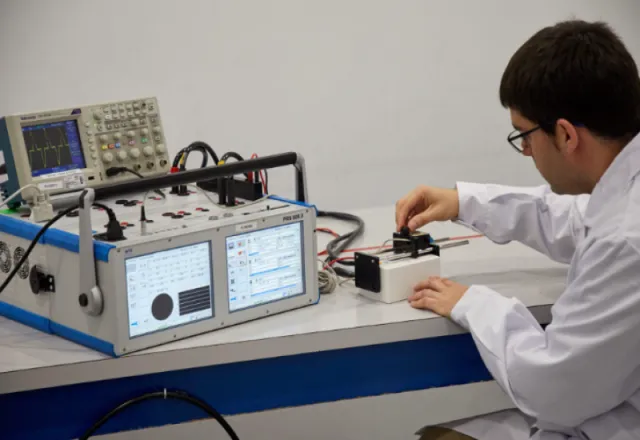
Accurate evaluation is usually performed using:
- impedance analyzers
- precision LCR meters
- 4-terminal Kelvin fixtures
- vector network analyzers
- APC-7 or low-parasitic coaxial accessories
Depending on the frequency range, measurements can span from Hz to GHz.
Importance in EMC Validation and Electronic Design
Incorrect ESR and ESL characterization can result in:
- ineffective EMI filters
- unexpected resonances
- high conducted emissions
- stability problems
- overheating
- shorter service life
- signal integrity failures
4-port measurement yields real electrical models of the capacitor for design, simulation and performance validation in industrial and high-frequency environments.