When Mexico published its grid code (Código de Red) in 2016, power quality stopped being just a maintenance concern and became a regulatory obligation. Many plants connected at medium or high voltage find out the hard way: a new drive, a welding line or a poorly sized capacitor bank pushes harmonics or flicker up, and when the review comes there are no reliable measurements to show compliance and no plan to fix it.
This article explains, for plant engineers and for HQ teams who need to understand Mexican requirements, what the grid code asks of industrial loads, what to measure, which instruments to use, how long to log, and how to get a site ready.
What the Código de Red is and who it applies to
The Código de Red is a set of general administrative provisions that sets the technical requirements for reliable operation of Mexico’s national power system. It was issued in 2016 by the energy regulator at the time, the Comisión Reguladora de Energía (CRE), and updated in 2021. Under the 2025 energy reform, CRE’s regulatory functions were transferred to the new Comisión Nacional de Energía, so check which version is currently in force and which authority oversees it for your site. CENACE (Centro Nacional de Control de Energía), the independent system operator, applies many of these criteria in day-to-day grid operation. CFE, the state-owned utility, remains the transmission and distribution company most plants deal with.
For an industrial user, the relevant part is the set of technical requirements for load centers (centros de carga), which applies to facilities connected at medium and high voltage. In practical terms, if your plant takes service at medium voltage through its own substation, it is very likely covered.
What you need to monitor
The load-center requirements cover several topics (voltage and frequency ranges, protection, information exchange), but the ones you resolve with power quality measurements are:
- Power factor: the grid code requires keeping it within a defined range; the figure most often cited is a minimum of 0.95. That is stricter than the threshold traditionally used in CFE tariffs for penalties and bonuses.
- Harmonic distortion: current distortion limits at the point of connection that depend on the ratio of available short-circuit current to load current, an approach equivalent to IEEE 519.
- Flicker: short-term (Pst) and long-term (Plt) severity, a real issue in plants with arc furnaces, resistance welders or frequent starts of large motors.
- Voltage and current unbalance: caused by large or poorly distributed single-phase loads.
The specific limits are in the grid code itself and depend on voltage level and short-circuit capacity at the point of connection. Don’t rely on generic numbers from the internet to decide whether you comply; work from the current version and calculate the limits that apply to your connection point.
What to measure with: IEC 61000-4-30 Class A analyzers
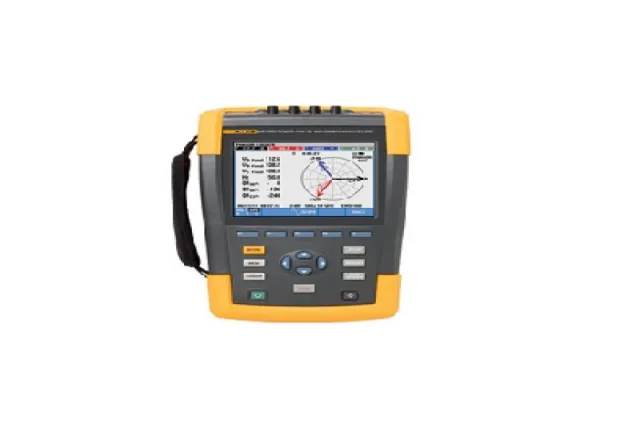
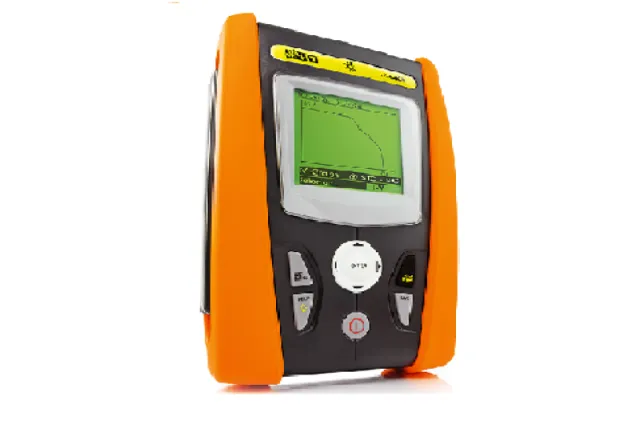
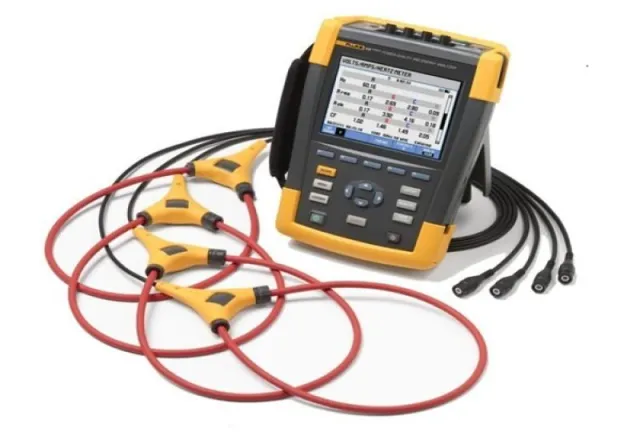
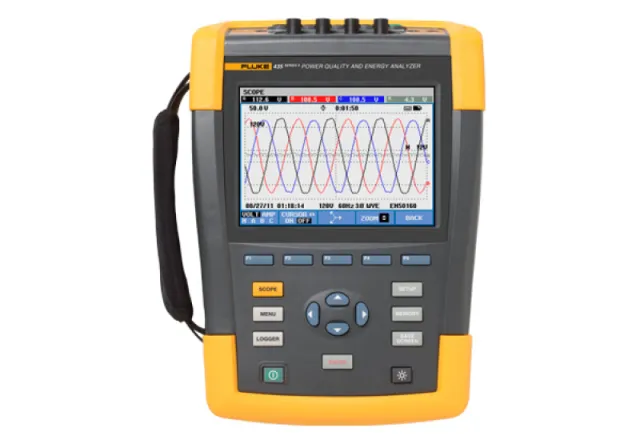
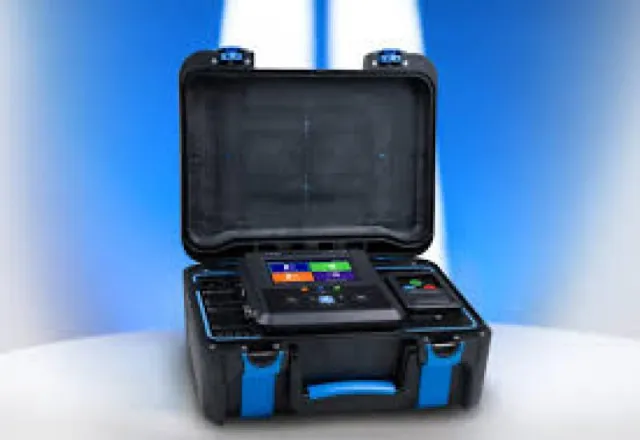
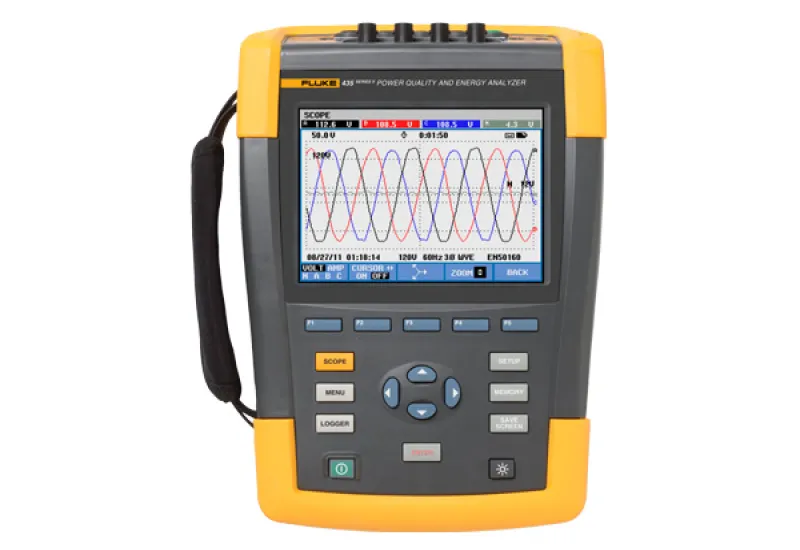
IEC 61000-4-30 defines power quality measurement methods and performance classes. A Class A analyzer ensures that two different instruments connected to the same point produce equivalent results, which is why it’s the right class whenever a measurement has contractual or regulatory weight. Key characteristics:
- Measurement over 10-cycle (50 Hz) or 12-cycle (60 Hz) windows of about 200 ms, aggregated into 3-second, 10-minute and 2-hour intervals.
- Time synchronization (for example, GPS) so intervals line up across instruments.
- Harmonics measured per IEC 61000-4-7 and flicker per IEC 61000-4-15.
- Voltage accuracy specified and certified by the manufacturer.
Calibration status matters as much as the class. A Class A analyzer with an expired calibration doesn’t give you the confidence you’re paying for, so always ask for a current certificate and check its traceability.
Where and how long to log
Compliance is assessed at the point of connection to the grid, normally on the medium-voltage side through the substation’s potential and current transformers. Measuring only at low voltage in a downstream panel is useful for troubleshooting, but it doesn’t represent what the grid sees from your plant.
As for duration, the widely accepted practice is to log for at least seven consecutive days so you capture a full production cycle, including weekends, shift changes and startups. Both IEEE 519 and EN 50160 evaluate aggregated values statistically over a week (for example, the 95th percentile of 10-minute values). If production is seasonal or campaign-based, measure during peak load or repeat the study.
Getting the plant ready
| Step | What to do |
|---|---|
| 1. Documentation | Update the single-line diagram and identify the point of connection, short-circuit capacity and maximum demand. |
| 2. Load inventory | List drives, rectifiers, UPS systems, welders, induction or arc furnaces, and capacitor banks. |
| 3. Baseline study | Log at least one week with a Class A analyzer at the point of connection. |
| 4. Diagnosis | Compare results with the applicable limits and trace sources with measurements on downstream panels. |
| 5. Mitigation | Correct power factor, install passive or active filters, use detuned capacitor banks, and rebalance single-phase loads. |
| 6. Verification | Repeat the measurement after corrections and keep the records as evidence. |
A common mistake is correcting power factor with plain capacitors without considering harmonics. The bank can resonate with system inductance, amplify distortion and fail within months. Run the harmonic study before sizing any compensation. If your plant has solar generation, the inverters also affect power quality at the connection point; in that case a power quality analysis for photovoltaic systems is worth adding.
Installing analyzers at medium voltage and any switching in the substation must be done by qualified personnel under lockout/tagout procedures, in line with NOM-001-SEDE-2012 (Mexico’s electrical installation code) and site safety rules.
FAQ
Can I use a Class S analyzer for a grid code study?
Class S instruments are fine for surveys and internal troubleshooting. When the result has to stand up in front of an authority or a third party, measure with a Class A instrument, whose method is defined so that different instruments produce comparable results.
Is one measurement enough?
A one-week study sets the baseline, but any major change in the plant, such as new lines, drives or expansions, can change the results. Many companies move to permanent monitoring or repeat the study periodically.
Should we buy or rent the analyzer?
For a one-off study or a post-correction check, renting is usually enough. If you have several substations or want continuous monitoring, buying pays off sooner.
How CreativeIT can help
CreativeIT is an electrical and electronic test laboratory based in Monterrey, Nuevo León, serving all of Mexico. We perform three-phase power quality analysis at your point of connection, offer power quality analyzer rental, and supply three-phase power quality analyzers for sale. Our instruments are traceable to NIST through verifiable calibration chains, and our own engineers do the analysis, with no subcontractors, delivering a professional report with a work plan and test protocol. Contact us at (81) 4777 6921 or (81) 2230 6079, via WhatsApp, or at info@creativeit.mx, and we’ll reply the same day.