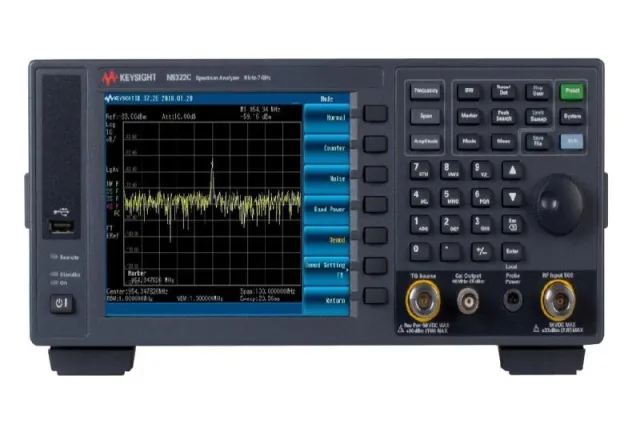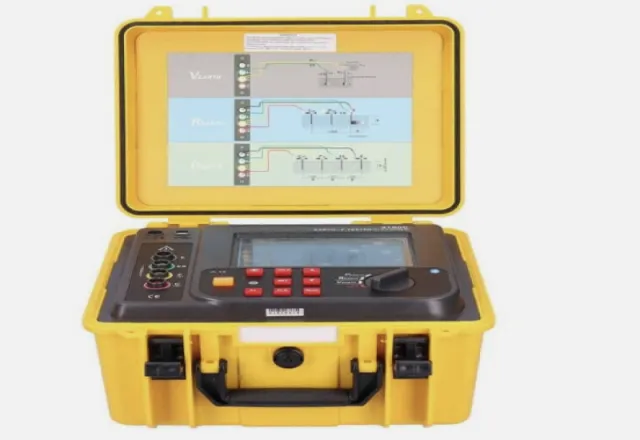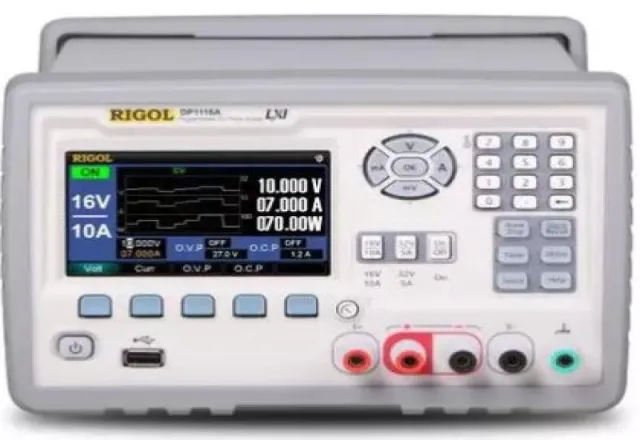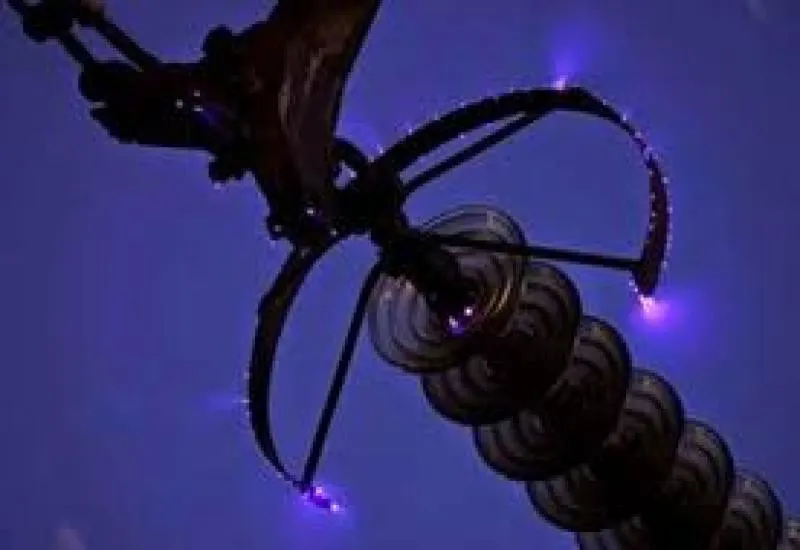
Many failures in medium-voltage switchgear, dry-type transformers, cable terminations and insulators do not start with a sudden short circuit, but with a silent process that can progress for months: partial discharge. These are small sparks inside or on the surface of insulation that, over time, erode the material, carbonise surfaces and open the way to a complete insulation failure. The good news is that they almost always leave detectable signs before the failure: ultrasonic sound, high-frequency electrical pulses, ozone and a whitish powder. This guide explains what partial discharges are, how they are detected with acoustic cameras and other methods, the limitations of each technique and how to build the inspection into your maintenance programme.
What a partial discharge is
IEC 60270 defines a partial discharge as a localised electrical discharge that only partially bridges the insulation between conductors. It occurs when the electric field at a point exceeds the local dielectric strength, for example in an air bubble inside a resin, on a contaminated surface or at a sharp edge on a conductor. The discharge does not cause an immediate failure, but every event releases energy that degrades the insulation cumulatively.
Three types are usually distinguished:
- Internal discharges: in voids, delaminations or cracks within solid insulation (resins, tapes, cable insulation). They are the hardest to see from outside.
- Surface discharges (tracking): across the surface of insulators, barriers or terminations, encouraged by dust, moisture and contamination. They leave tree-shaped carbon tracks.
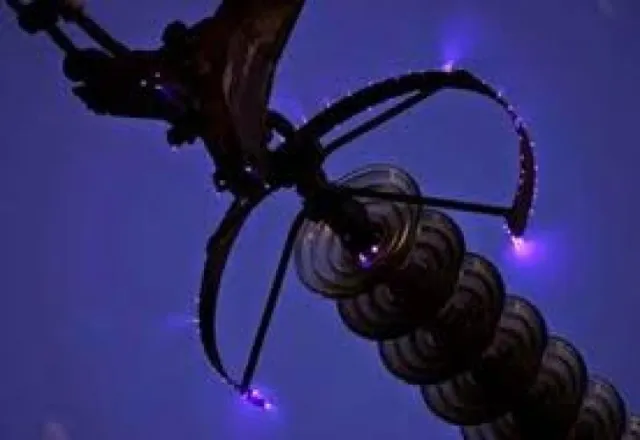
- Corona: ionisation of the air around conductors or hardware with points or sharp edges. It is common on overhead lines and outdoor substations.
Why they matter in industry
In a plant, partial discharges frequently appear in medium-voltage switchgear and panels, in poorly made cable terminations and joints, in dry-type transformers, in medium-voltage motor windings and in substation insulators. Some of the most common causes are:
- Terminations or joints with poor cable preparation or misplaced stress control.
- Moisture and condensation inside switchgear, especially with large temperature swings.
- Conductive dust, industrial contamination or salt deposits on insulators.
- Insufficient clearances, loose bolts or hardware with sharp edges.
- Natural ageing of the insulation.
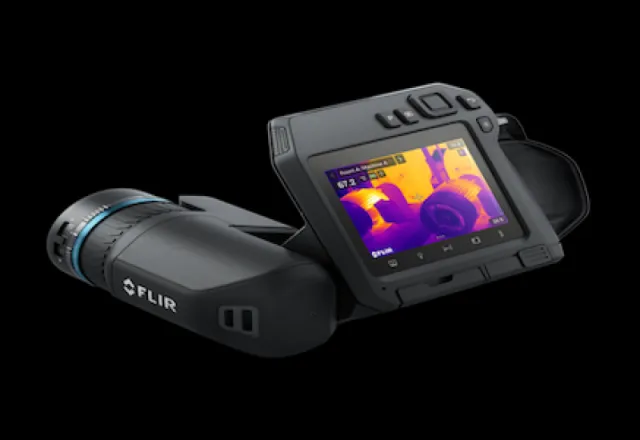
An important point: partial discharges generally do not produce enough heat to show up in thermography until advanced stages. A thermographic survey with no anomalies does not rule them out.
Detection methods
| Method | What it detects | Advantages | Limitations |
|---|---|---|---|
| Conventional electrical measurement (IEC 60270) | Apparent charge of the pulses, in picocoulombs (pC) | Quantitative and standardised; used in factory and acceptance tests | Requires coupling to the circuit and, usually, equipment out of service or a test source |
| Ultrasound and acoustic camera | Acoustic emission from the discharge, carried through the air | Non-contact, with equipment energised and at a distance; locates the source on an image | Only detects what has an air path to the sensor; of limited use for internal discharges in sealed equipment |
| TEV (transient earth voltage) | Pulses induced on the metal enclosure of switchgear | Fast way to survey metal-clad MV panels | Sensitive to interference; most useful for comparing panels |
| HFCT and UHF | High-frequency pulses on earth conductors or electromagnetic radiation | Detect internal discharges, for example in cables | Require sensor installation and experience to separate noise |
IEC 60270 covers the conventional electrical method; acoustic and electromagnetic methods are addressed in complementary documents such as IEC TS 62478. No single method covers every case, and for critical equipment it is worth combining at least two.
How an acoustic camera works
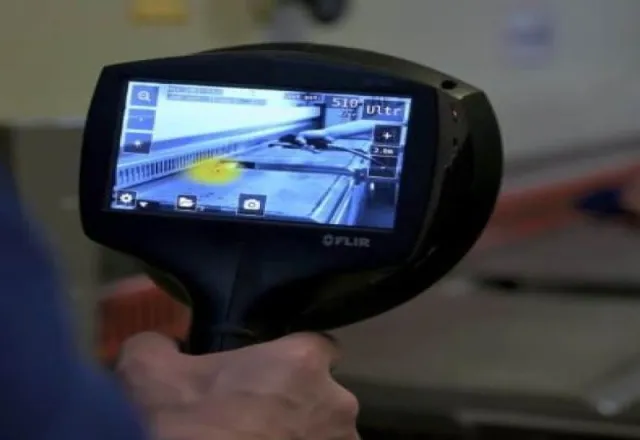
An acoustic camera uses an array of dozens of microphones and digital processing to calculate where sound is coming from. The result is a colour map overlaid on the video image that marks the origin of the ultrasonic emission. Compared with a single-sensor ultrasonic detector, the big advantage is location: instead of hunting for the spot by ear, the technician sees on screen which insulator, termination or busbar is emitting.
Many cameras also analyse the pattern of the signal relative to the mains frequency (60 Hz in Mexico) to help distinguish a partial discharge from other ultrasonic sources such as compressed-air leaks or mechanical noise. This automatic classification is an aid, not a definitive diagnosis: the technician’s interpretation is still needed.
The same cameras can locate compressed-air, gas and vacuum leaks, so a single walk-through can serve several maintenance goals.
How an inspection is carried out
- Planning: gather single-line diagrams, identify the panels, transformers and terminations of interest, and define the route.
- Safety: the inspection is done with equipment energised and from outside, with doors and covers closed, using grilles or viewing windows where available. Never open a medium-voltage panel just to “see better”: opening it changes the risk level and must follow the electrical risk assessment required by NFPA 70E and, in Mexico, NOM-029-STPS.
- Recording conditions: note load, temperature, humidity and any smell of ozone or audible noise. Humidity has a strong influence on surface activity.
- Survey: scan each item with the camera from a safe distance, saving images and videos of every finding and of areas without activity as a reference.
- Cross-check: where possible, confirm with TEV or a second technique, and add thermography to catch hot spots from loose connections.
- Report: location, probable type of discharge, evidence and recommendation (monitor, clean, repair or act soon).
How to interpret the findings
There is no universal acoustic value that separates “acceptable” from “dangerous”: the measured amplitude depends on distance, angle, barriers between the source and the sensor and the equipment itself. Interpretation therefore rests on several criteria:
- Type of discharge: outdoor corona can be relatively benign; surface discharges in indoor switchgear usually point to contamination or moisture that should be corrected; discharges at cable terminations deserve priority attention.
- Location and criticality: the same activity in a panel feeding a continuous process has a different priority from one on a standby circuit.
- Trend: the most valuable criterion. Repeating the inspection under similar conditions and comparing shows whether activity is growing.
- Physical evidence: when a shutdown is scheduled, visual inspection usually confirms carbon tracks, white powder or corrosion at the indicated spot.
What to do next
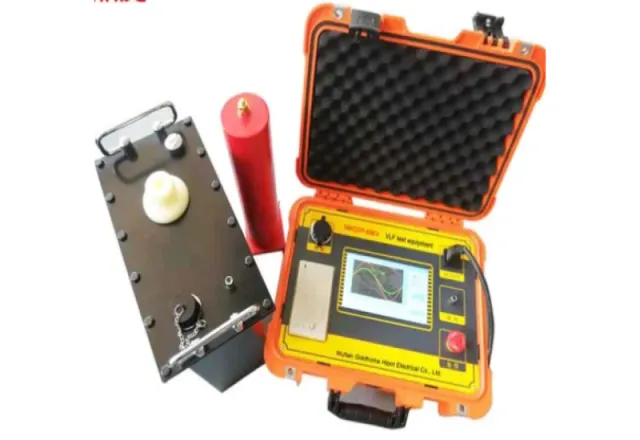
Depending on the finding, typical actions are cleaning and drying insulators and barriers, controlling humidity with anti-condensation heaters or better sealing, remaking terminations or joints, correcting clearances and tightening or replacing hardware. After the correction, a new inspection confirms that the activity has gone. For medium-voltage cables with suspected internal defects, a VLF test complements the diagnosis, and an insulation resistance measurement helps assess overall condition.
How CreativeIT can help
At CreativeIT Group in Monterrey we carry out partial discharge detection with acoustic cameras and offer acoustic camera rental for maintenance teams who prefer to run their own surveys. We also support you with thermography of electrical panels and other electrical services. Contact us on (81) 4777 6921 or at info@creativeit.mx to plan your inspection.