Opening a breaker does not mean a circuit is de-energized. There can be backfeed from another source, charged capacitors, voltage induced by nearby lines, a breaker with a welded pole or a wrong label on the panel. That is why verifying the absence of voltage is the step that turns disconnected equipment into equipment that is safe to work on. It is also one of the steps most often done wrong: with the wrong instrument, measuring only one phase, or without checking that the tester works. This guide explains how to do it correctly at low and medium voltage, which instruments to use and which mistakes to avoid.
Where verification fits in safe work
NFPA 70E, in Article 120, describes the process for establishing an electrically safe work condition. In Mexico, NOM-029-STPS-2011 requires maintenance of electrical installations to be carried out with safety procedures, lockout/tagout and suitable personal protective equipment. In general terms, the sequence is:
- Identify every possible source of supply using up-to-date drawings, including generators, PV systems, UPS units and backup feeds.
- Interrupt the load current and open the disconnecting device for each source.
- Where possible, visually verify that the blades are open or that a drawout breaker is in the disconnected position.
- Release or block stored energy (capacitors, springs, pressure).
- Apply locks and tags according to the company procedure.
- Verify the absence of voltage with a suitable instrument.
- Install temporary protective grounds where induced voltage or re-energization is possible.
Until verification is complete, the equipment is considered energized. That means the person taking the measurements must wear the personal protective equipment required for energized work, according to the shock and arc flash risk assessment.
The live-dead-live method
A tester that fails and reads zero is more dangerous than having no tester at all, because it gives false confidence. That is why NFPA 70E requires checking the instrument before and after the test. In practice this is known as the live-dead-live method:
- Live: measure a known voltage source and confirm the instrument reads correctly. This can be a nearby energized circuit of similar voltage or a proving unit designed for the purpose.
- Dead: measure the circuit you are going to work on, at every point needed.
- Live again: measure the known source again to confirm the instrument was not damaged during verification (a blown fuse or broken probe would give a false zero reading).
What to measure on a three-phase circuit
Measuring only phase to phase is not enough, and neither is measuring only phase to ground. On a three-phase system with a neutral, complete verification includes:
| Measurement type | Points |
|---|---|
| Phase to phase | L1–L2, L2–L3, L1–L3 |
| Phase to ground | L1–G, L2–G, L3–G |
| Phase to neutral (if present) | L1–N, L2–N, L3–N |
| Neutral to ground | N–G |
Measure at the point where you will work, not only at the breaker output. If there is more than one connection point (for example, the line and load side of a starter, or equipment with a dual feed), verify each one. On equipment with variable frequency drives or power supplies with capacitors, also measure the DC bus after the discharge time stated by the manufacturer; that time can be several minutes.
Suitable and unsuitable instruments
Low voltage
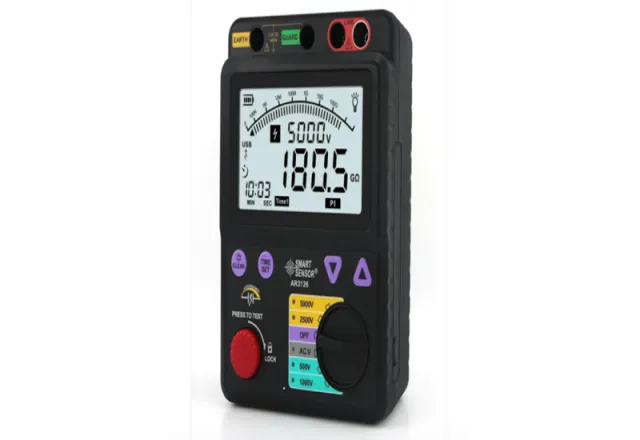
At low voltage, two-pole voltage testers or good-quality multimeters are used. What matters is that the instrument has the right measurement category under IEC 61010 (CAT III or CAT IV for panels and service entrances) and a sufficient voltage range, that the test leads are in good condition, and that the user knows how to interpret it.
Non-contact pen-type voltage detectors are useful for a quick check, but they are not suitable as the only verification: they may fail to detect voltage on shielded cables, inside metal conduit or when the battery is low. Use them as a complement, never as a substitute for a direct measurement.
Medium and high voltage
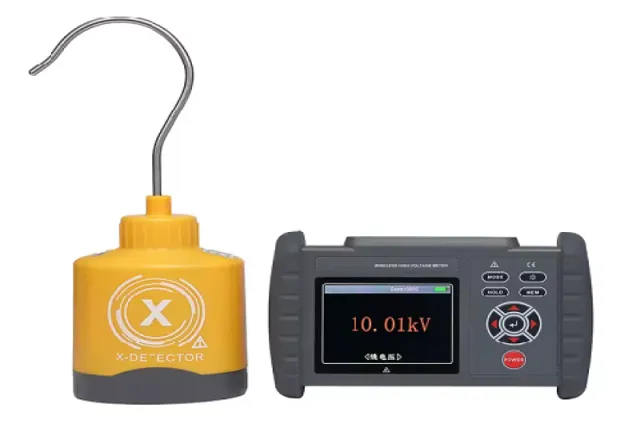
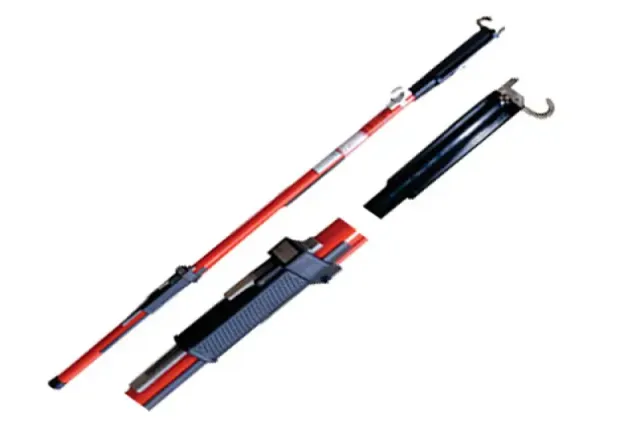
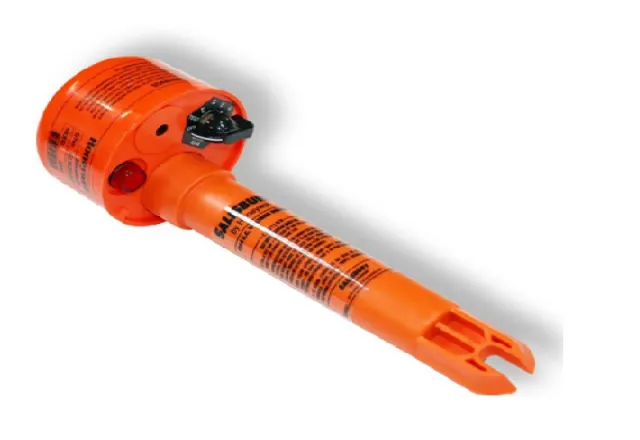
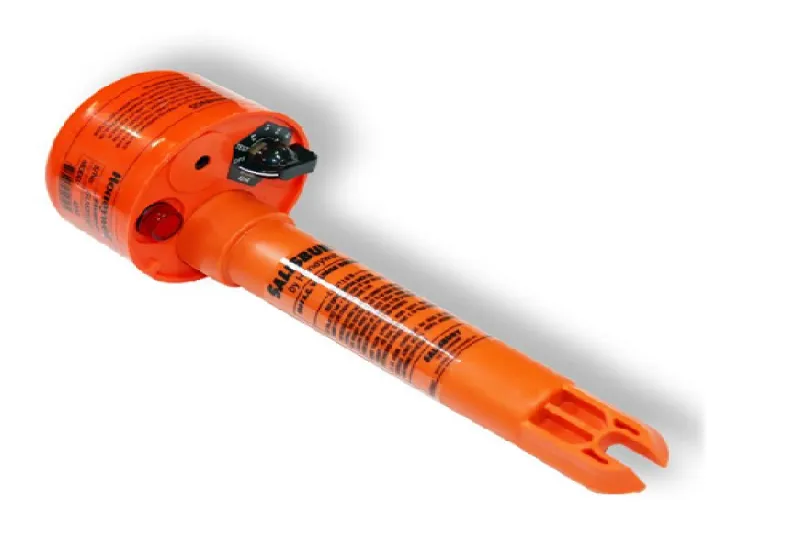
At medium voltage, voltage detectors designed for the system voltage are used, usually mounted on an insulating hot stick. The IEC 61243 standards cover these detectors. Before use, check them with the self-test function and, preferably, with a test source or a known energized installation. Make sure the hot stick is clean, dry, undamaged and gives the right working distance for the voltage.
Permanently mounted absence of voltage testers
NFPA 70E allows, as an alternative, the use of a permanently mounted absence of voltage tester listed for the purpose (UL 1436 covers this type of device). These devices automatically check their own operation and each conductor before the panel is opened. They are useful on equipment that is worked on frequently, but must be installed and used according to the manufacturer’s instructions.
Ghost voltages and induced voltage
A digital multimeter has a high input impedance, in the megohm range. On a disconnected conductor running alongside energized ones, capacitive coupling can produce a reading of several tens of volts even though the conductor cannot deliver dangerous current. This is called ghost voltage.
Many multimeters have a low-impedance (LoZ) mode that loads the circuit so a ghost voltage disappears, while a real voltage remains. Use this function to interpret the reading, but do not use it to dismiss a reading lightly: an unexpected reading must be investigated before touching the circuit. Induced voltage on long lines or near high-voltage circuits can be dangerous; in those cases temporary protective grounds are required.
Common mistakes
- Using a multimeter with the lead in the current (A) jack instead of the voltage jack, or with the selector on the wrong function.
- Skipping the known-source check before or after.
- Measuring only phase to phase and not to ground, or the other way round.
- Measuring at a different point from the one you will work on.
- Forgetting backup sources, backfeed from control circuits or voltage from potential transformers.
- Using instruments with an insufficient measurement category, damaged leads or no periodic verification.
- Removing personal protective equipment before verification is complete.
Keep your instruments in good condition
Absence of voltage verification is only as reliable as the instrument used. Inspect leads, cables and housing before each use; replace fuses only with those specified by the manufacturer; and verify or calibrate instruments periodically. For hot sticks and medium-voltage detectors, the insulation must also be inspected and the dielectric tests specified by the manufacturer or the company’s safety program must be carried out.
How we can help
At CreativeIT Group we offer absence of voltage detectors for sale, rental of wireless high-voltage voltmeters and rental of hot sticks for live-line work. We also supply personal protective equipment kits. Contact us and we will help you choose the right instruments for your installation.