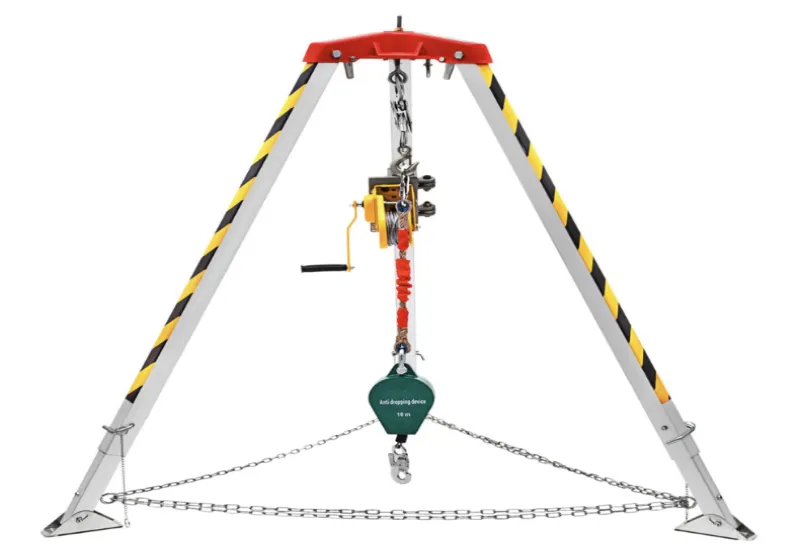
We offer sale or rental of rescue tripods designed to provide access, evacuation, rescue, and fall arrest in confined spaces. Compliant with OSHA and STPS-0033-STPS-2015. It consists of a tripod with telescopic legs made of high-strength reinforced aluminum, a 30.4-meter (100 ft) steel-cable self-retracting lifeline, and a winch.
A “rescue tripod” is a device used in rescue operations to provide stability and support while raising or lowering people or objects. It generally consists of three legs extending from a central point, forming a triangular structure. These tripods are typically used in combination with pulley systems, ropes, and harnesses to perform rescues in hard-to-reach places such as wells, confined spaces, or elevated areas. Its design distributes weight evenly and provides a secure base for rescue operations.
A “rescue tripod” is a device used in rescue operations to provide stability and support while raising or lowering people or objects. It generally consists of three legs extending from a central point, forming a triangular structure. These tripods are typically used in combination with pulley systems, ropes, and harnesses to perform rescues in hard-to-reach places such as wells, confined spaces, or elevated areas. Its design distributes weight evenly and provides a secure base for rescue operations.
There are different types of rescue tripods, each designed for specific situations and to meet certain rescue requirements. Here are some examples of rescue tripods and their applications:
1. Confined space tripod.
· Purpose: Designed for rescue operations in confined spaces such as wells, tunnels, or tanks.
· Features: They usually have adjustable legs to fit narrow spaces, and often include accessories for installing hoisting and rescue systems.
2. High-angle rescue tripods:
· Purpose: Used in situations that require rescue at height, such as buildings, towers, or elevated structures.
· Features: Designed to provide stability on elevated terrain and equipped with anchor systems and connection points for ropes and harnesses.
3. Swiftwater rescue tripods:
· Purpose: Used in rescue operations in aquatic environments, such as rivers or swift water.
· Features: They are usually water-resistant and equipped with hoisting and anchor systems specific to aquatic environments.
4. Mountain rescue tripods:
· Purpose: Designed for rescue operations in mountainous or rugged terrain.
· Features: Lightweight and portable, with adjustable legs to fit uneven terrain. They may include anchor systems and rope supports.
5. Industrial tripods:
· Purpose: Used in industrial environments for rescue in places such as chemical plants, refineries, or industrial structures.
· Features: Robust and designed to withstand harsh conditions. They are often equipped with accessories specific to industrial environments, such as protection against chemicals or corrosion.
It is crucial to select the right rescue tripod for the environment and the specific requirements of the situation. In addition, rescue personnel must receive proper training in the use of this equipment to ensure safe and effective operations.
If you are looking for a confined space rescue tripod with a load capacity of 1800 pounds, it is essential to make sure the equipment complies with the applicable safety standards and regulations. It is also important to follow the manufacturer’s recommendations and safety guidelines to ensure proper use.
When looking for a confined space rescue tripod with a capacity of 1800 pounds, consider features such as leg adjustability to fit narrow spaces, the strength and durability of the material, and the connection and anchor points.