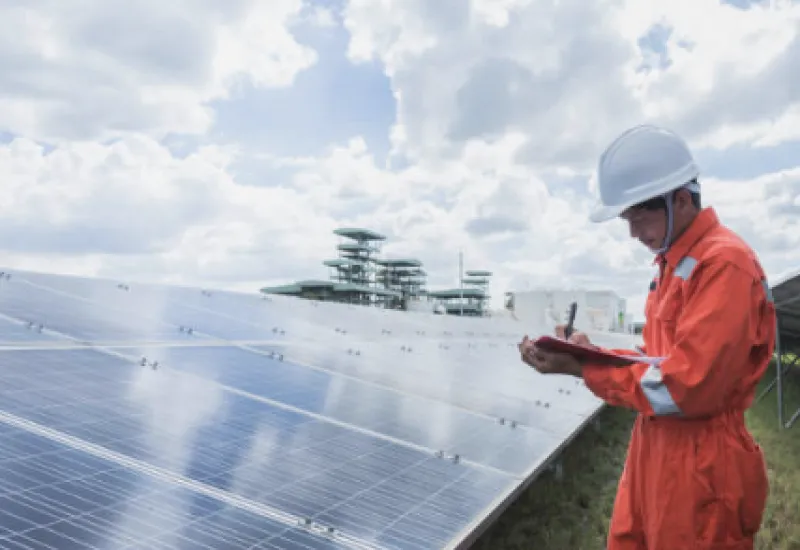
Maximize Your Solar Energy with Solar Irradiance Analysis Services from Creativeit Group
At Creativeit Group, we are proud to present our solar analysis and irradiance services, applying the international standards IEC 60904, NMX-J-612-ANCE (Mexican photovoltaic testing standard) and ISO 9060, designed to maximize the performance and efficiency of your solar panels. With the growing demand for sustainable and renewable energy, solar power has become an increasingly popular option for homes and businesses looking to cut costs and help protect the environment.
What is solar irradiance and why is it important?
Solar irradiance refers to the amount of electromagnetic radiation emitted by the Sun that reaches the Earth’s surface. This radiation is essential for solar panels to convert it into electrical energy. Factors such as geographic location, weather conditions and panel orientation influence the amount of irradiance they receive.
The solar irradiance of a photovoltaic panel refers to the amount of solar radiation that strikes the panel’s surface over a given period of time. This solar radiation is the energy source that allows the panel’s photovoltaic cells to generate electricity.
Several steps can be followed to analyze photovoltaic cells:
-
Solar irradiance measurement: It is important to measure the solar irradiance incident on the area where the panel is located. Instruments such as pyranometers or weather stations are used to record the amount of solar energy reaching the panel over a given period of time, generally in units such as watts per square meter (W/m²).
-
Temperature measurement: Temperature also affects the performance of photovoltaic cells. The panel temperature is measured to evaluate how this affects the efficiency of converting solar energy into electricity.
-
Current and voltage: Current and voltage measurements are taken on the photovoltaic cells to evaluate their performance. These measurements can be made under laboratory conditions or in the field using specialized equipment.
-
I-V curve analysis: A common technique for analyzing the performance of photovoltaic cells is to perform I-V (current-voltage) curve tests. These tests involve varying the electrical load applied to the cells and measuring the resulting current, which makes it possible to determine the efficiency and electrical characteristics of the cells.
-
Visual inspection: In addition to electrical measurements, a visual inspection of the cells can be performed to detect potential defects, damage or deterioration that may affect their performance.
-
Data analysis: Once all the data has been collected, an analysis is performed to evaluate the overall performance of the panel, identify potential problems or areas for improvement, and make decisions regarding maintenance, repairs or upgrades.
In summary, photovoltaic cell analysis involves measuring solar irradiance, temperature and electrical characteristics, together with visual inspection, to evaluate performance and determine actions to improve efficiency and durability.
Benefits of Our Solar Analysis and Irradiance Services:
- Performance Maximization: We optimize the position and tilt of your solar panels to ensure they receive the greatest possible amount of solar irradiance.
- Energy Savings: By maximizing the efficiency of your solar panels, we help you reduce your consumption of conventional electricity and therefore save on your energy bills.
- Contribution to Sustainability: By using solar energy, you are actively contributing to protecting the environment by reducing carbon emissions and lowering your ecological footprint.
- Personalized Advice: Our experts will provide you with a customized solar irradiance study and guide you in making decisions to optimize your solar system.
Key Factors to Consider in Solar Irradiance:
-
Optimal Orientation: Panels should face the sun to receive the maximum possible irradiance. In the northern hemisphere, a south-facing orientation is recommended; in the southern hemisphere, north-facing.
-
Proper Tilt: Panel tilt is also crucial. Our experts make sure the panels are tilted so that the sun’s rays strike them optimally throughout the year.
-
Impact of Weather Conditions: Factors such as cloud cover, humidity, pollution and rain can affect the amount of solar irradiance reaching the panels. We perform detailed analyses to take these factors into account and optimize the performance of your solar system.
At Creativeit Group, we believe in the importance of solar energy as a clean, sustainable source of electricity. With our solar analysis and irradiance services, we help you make the most of the power of the sun for a greener, more efficient future.
Contact us today to begin your journey toward a more sustainable, energy-efficient home or business with Creativeit Group!