Insulating matting is one of the most common safety items in front of switchboards, motor control centers and medium-voltage switchgear, and also one of the most neglected. It is laid down once and often never checked again: it collects dust, oil, metal shavings and ozone cracks until it no longer does its job. An insulating mat only protects if it is the right class for the equipment voltage, if it is complete and clean, and if its insulation is still sound. This guide explains how mats are classified under ASTM D178, how to inspect them, when testing makes sense and which mistakes to avoid.
What an insulating mat is and what protection it gives
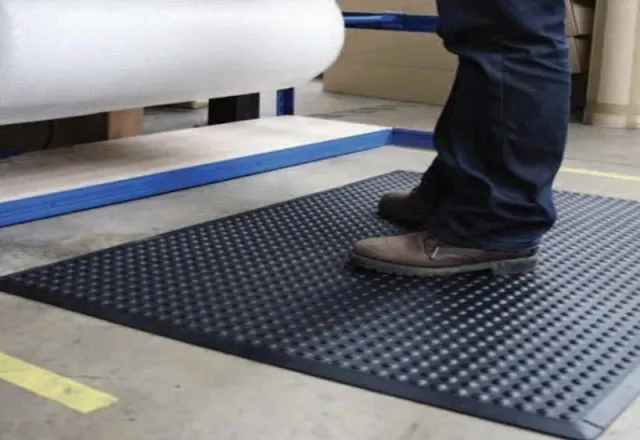
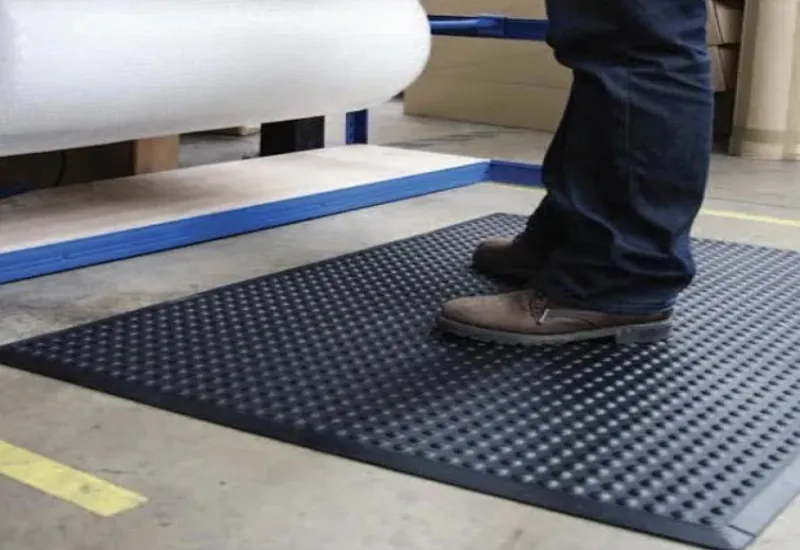
An insulating mat, also called dielectric matting or a switchboard mat, is a sheet of rubber or elastomer designed to insulate a person from the floor while working on or operating electrical equipment. Its purpose is to reduce the risk of current flowing through the body to ground in the event of accidental contact with an energized part.
It is important to understand its role: the mat is supplementary protection. It does not replace de-energizing, lockout/tagout, absence-of-voltage verification or personal protective equipment such as insulating gloves. NFPA 70E and Mexico’s NOM-029-STPS-2011 require electrical work to follow safety procedures and use the protective equipment identified by the risk assessment; the mat is part of that set, not a substitute for it. Nor does it provide any arc flash protection.
Classification under ASTM D178
ASTM D178 is the specification most widely used in Mexico for rubber insulating matting. Internationally there is also IEC 61111. Both classify mats by class according to maximum use voltage. In ASTM D178, the classes and their maximum AC use voltages are:
| Class | Maximum use voltage (AC) |
|---|---|
| 0 | 1,000 V |
| 1 | 7,500 V |
| 2 | 17,000 V |
| 3 | 26,500 V |
| 4 | 36,000 V |
Each class has a factory proof-test voltage higher than its use voltage, set by the standard. When selecting, compare the nominal voltage of the equipment the mat will be placed in front of (phase-to-phase voltage for AC systems) with the class’s maximum use voltage. For example, a 480 V switchboard is covered by Class 0, while 13.8 kV switchgear needs at least Class 2. If you are unsure about the edition of the standard or the values for a specific product, check the manufacturer’s data sheet.
The standard also distinguishes two material types:
- Type I: made of natural rubber or an equivalent synthetic (cis-1,4-polyisoprene), with no special ozone resistance.
- Type II: made of ozone-resistant elastomers. This is the better choice in substations, motor rooms and areas with equipment that produces ozone, or where the mat will be exposed outdoors.
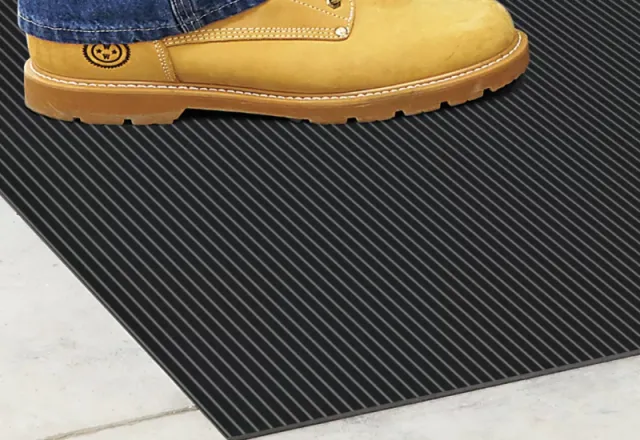
Besides class and type, consider the surface finish (smooth or anti-slip textured), thickness, roll width, oil resistance if hydraulics or lubricants are nearby, and the product marking. A mat with no class or manufacturer marking gives you no way to show what protection it provides.
How to install it properly
- Cover the whole area where a person stands to operate or work on the equipment, not just the front of one door. On long switchboards, the mat should span the full working front.
- Avoid joints directly in front of operating points. If joints are unavoidable, follow the manufacturer’s overlap recommendations.
- Lay the mat on a clean, dry floor. Shavings, screws or glass underneath can puncture it over time.
- Do not use it as a path for forklifts, pallet jacks or heavy carts: rolling loads deform and damage it.
- Keep the area tidy: a mat with curled or folded edges is also a trip hazard.
Visual inspection: what to look for
Visual inspection is the first line of control and should be done periodically according to the plant’s safety program, and whenever there is doubt about the mat’s condition. ASTM F1236 provides a visual inspection guide for electrical protective rubber products that is a useful reference. The most common defects are:
- Cuts, punctures and tears, especially near switchboard doors.
- Embedded objects: metal shavings, wire strands or filings stuck in the rubber that create a conductive path.
- Ozone cracking: fine surface cracks, often where the mat has been folded or stretched.
- Swelling, softening or stickiness from contact with oils, solvents or chemicals.
- Wear and thinning in high-traffic areas.
- Surface contamination: conductive dust, moisture or grease that reduce surface insulation.
Clean the mat with water and mild soap, or with the product the manufacturer specifies, and let it dry before putting it back in service. Avoid solvents, which can degrade rubber. If you find a defect that compromises the insulation, take that section out of service and replace it; do not repair it with tape or patches.
Dielectric testing: when and how
Visual inspection does not catch every problem. A dielectric test applies an AC test voltage between electrodes placed on both sides of the mat, section by section, and confirms the material withstands the voltage without breakdown. It is carried out with high-voltage test equipment under controlled procedures, and the result is documented in a record or certificate showing the mat’s identification, class, applied voltage and result.
Unlike insulating gloves, which have well-established retest intervals, there is no single interval that applies to mats in every case. Many companies set it in their safety program, taking into account the manufacturer, the environment (temperature, ozone, oils), the voltage class and the requirements of their insurers or audits. As a practical rule, it makes sense to test:
- On receipt of new mats without reliable test documentation.
- At the interval defined in the plant’s maintenance program.
- After any damage, serious contamination or doubt about condition.
- Before reusing a mat that has been in storage for a long time.
Storage
Rubber degrades with sunlight, heat, ozone and permanent deformation. Store spare mats in a cool, dry, dark place away from motors, transformers and other ozone sources. Store them flat or loosely rolled, never folded, and with nothing heavy on top.
Common mistakes
- Choosing the class on price rather than on equipment voltage.
- Using ordinary industrial rubber mats with no dielectric class as if they were insulating.
- Covering only part of the working front.
- Letting metal shavings or oil build up on the surface.
- Keeping no record of inspections and tests.
- Relying on the mat as the only protection and skipping gloves, voltage verification or lockout.
How we can help
At CreativeIT Group we provide certification of insulating mats and dielectric matting and offer ASTM D178 insulating mats for sale. We also carry out insulating glove testing and supply personal protective equipment kits. Contact us to confirm the right class for your switchboards or to schedule testing of your mats.