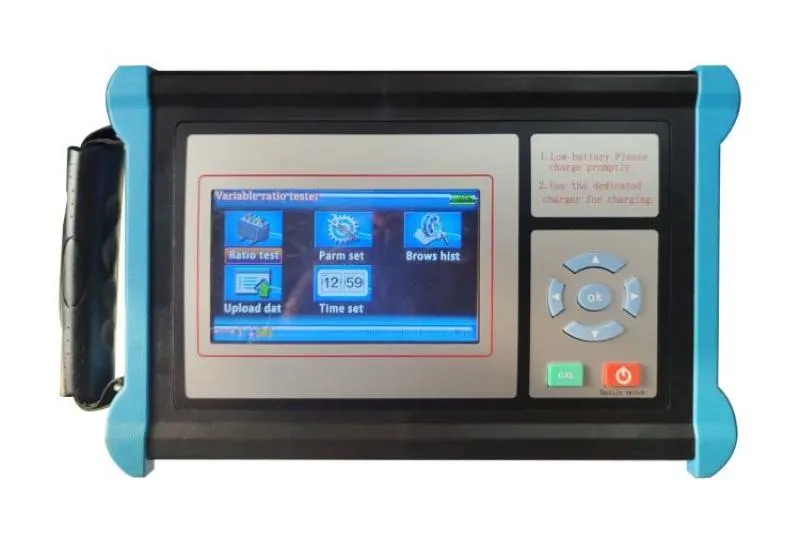
PS-BB101A Portable Transformer Turns Ratio Tester: Precision in Transformer Diagnostics
The PS-BB101A portable transformer turns ratio tester is a specialized electronic instrument used to verify the turns ratio (TTR) between the primary and secondary windings of an electrical transformer. This parameter is one of the most important indicators for confirming that a transformer is correctly manufactured, installed and operating within its specifications.
In electrical power systems, even a small deviation in the turns ratio can indicate internal winding faults, tap changer errors, incorrect connections or insulation deterioration. For this reason, turns ratio measurement is a mandatory test during manufacturing, commissioning, preventive maintenance and diagnostics of power and distribution transformers.
The PS-BB101A is designed as a portable, automated, high-precision instrument capable of testing single-phase or three-phase transformers directly in the field or in the laboratory. Its electronic architecture replaces the old turns ratio bridges, which required complex procedures and phase-by-phase testing. In contrast, this instrument performs complete measurements quickly, digitally and with automatic recording of results.
Thanks to its internal lithium battery, compact size and high accuracy, the instrument is widely used by electric utilities, test laboratories, transformer manufacturers, substations and industrial maintenance departments.
What does the instrument do and how does it interact with the transformer?
The turns ratio tester works by applying a controlled test voltage to the transformer’s primary winding and measuring the voltage induced in the secondary winding.
Due to the electromagnetic principle of transformers, the ratio between input and output voltages is directly proportional to the number of turns in each winding:
Turns ratio = N2/N1 = V2/V1
where:
-
N₁ / N₂ = number of turns of the primary and secondary
-
V₁ / V₂ = voltages measured on each winding
The instrument automatically compares the measured value with the expected nominal value and calculates:
-
Actual turns ratio
-
Percent error
-
Transformer polarity
-
Vector group
-
Tap changer position
The internal microprocessor instantly calculates the ratio between the primary and secondary voltage (Vp/Vs), comparing it with the nominal ratio that the user has entered or that the instrument has obtained from an internal database. Beyond the ratio, the instrument analyzes the excitation current and the phase angle between the signals, which makes it possible to detect not only ratio errors but also incipient problems such as shorted turns, defective magnetic circuits or incorrect connections on the tap changers. The interaction is completely bidirectional: the PS-BB101A excites the magnetic core and evaluates its electrical response, providing an accurate diagnosis of the transformer’s electromagnetic condition.
The instrument also includes protection against incorrect connections, short circuits and reversed polarity, which protects both the instrument and the transformer during the test.
Main technical data
The PS-BB101A incorporates high-precision digital measurement electronics designed for fast field testing. Its main technical characteristics include:
Ratio measurement range
-
0.9 to 10000
Measurement accuracy
-
±0.1 % ± 2 digits (0.9 – 500)
-
±0.2 % ± 2 digits (500 – 2000)
-
±0.3 % ± 2 digits (2000 – 4000)
-
±0.5 % ± 2 digits (above 4000)
Minimum resolution
-
0.0001
Test output voltage
-
160 V / 10 V with automatic switching
Test time
-
Approximately 5 seconds per phase measurement
Storage capacity
-
Up to 850 test records
Display
-
240 × 128 graphic LCD
Power supply
-
Internal lithium battery
Operating temperature
-
−10 °C to 40 °C
Relative humidity
-
≤ 80 % non-condensing
These characteristics allow fast, repeatable and highly reliable testing even in industrial environments or electrical substations.
Main uses of the PS-BB101A
The turns ratio tester is a fundamental tool at multiple stages of an electrical transformer’s life cycle.
Transformer manufacturing
During production, the TTR test verifies that the turns ratio corresponds exactly to the transformer’s electrical design. This ensures that the equipment delivers the correct voltage in operation.
Field acceptance testing
Before energizing a new transformer in a substation, turns ratio measurement confirms that there are no connection errors or damage during transport.
Preventive maintenance
On in-service transformers, periodic measurements make it possible to detect:
-
winding degradation
-
mechanical displacement of the core
-
tap changer faults
-
turn-to-turn short circuits
Fault diagnosis
When a transformer shows operating anomalies such as overcurrents or voltage imbalance, the TTR test helps determine whether the problem is related to the winding system.
Importance of the turns ratio in electrical systems
The turns ratio defines the electrical behavior of a transformer. If a transformer was designed to step down a voltage from 13.8 kV to 480 V, the number of turns in each winding must correspond exactly to the ratio between these voltages. When this proportion changes due to winding damage or tap changer errors, the transformer will no longer deliver the correct voltage.
A small deviation can cause significant problems in the electrical network. For example, an incorrect ratio can cause overvoltage on connected equipment, excessive currents in the windings or imbalances in three-phase systems. Over time, these conditions can lead to electric motor failures, cable overheating or protection trips.
For this reason, turns ratio measurement is a mandatory test during transformer manufacturing, before commissioning and during preventive maintenance programs in electrical substations and industrial facilities.
Tap Changer Evaluation
Many power transformers include a device called a tap changer, which allows the turns ratio to be adjusted slightly to compensate for voltage variations in the electrical network.
The PS-BB101A makes it possible to evaluate the operation of this mechanism by measuring the turns ratio at each tap position. If any position produces a value outside the expected range, the instrument will detect it immediately.
This type of diagnostic is especially important for transformers used in electrical substations, where precise voltage control is essential for the stability of the distribution system.
Standards
IEC 60076 – Power Transformers
This standard from the International Electrotechnical Commission establishes the general requirements for the design, testing and operation of power transformers. It includes test procedures for verifying the turns ratio and winding connection, parameters that the PS-BB101A can measure accurately.
IEEE C57.12.90
A standard from the Institute of Electrical and Electronics Engineers that defines the test methods for power and distribution transformers. Among the mandatory tests is the measurement of the voltage ratio between windings, used to validate the integrity of the transformer.
NOM-001-SEDE
The Mexican Official Standard NOM-001-SEDE (Electrical installations) establishes requirements for the safety and proper operation of electrical installations. Verifying transformers through electrical tests such as turns ratio helps ensure that installed equipment operates within safe parameters.
CFE procedures for transformer testing
The Federal Electricity Commission (Comisión Federal de Electricidad, CFE) establishes maintenance procedures and acceptance tests that include turns ratio measurements as part of the diagnostics of power and distribution transformers.
Importance of turns ratio measurement
The turns ratio test is one of the most important electrical tests for the reliability of electrical systems. Even a minimal deviation can cause:
-
incorrect voltages in the system
-
overcurrents in windings
-
excessive heating
-
failures in connected equipment
-
irreversible transformer damage
For this reason, instruments like the PS-BB101A provide fast, accurate and repeatable measurements that safeguard the integrity of the transformer throughout its entire life cycle.
Need Advice or a Quote?
Contact us today on WhatsApp at 8117860768 for pricing, availability and usage recommendations. At Creativeit Group, our specialized technical team can help you integrate it into your measurement processes.