We analyze all types of lubricants, in a laboratory that is 100% transparent in all tests and analyses.
Applying the international standards ASTM D02 Series, ISO 4406 and ISO 21469. Lubricant analysis is a task that can save us a great deal of money and time in repairs. Lubrication is essential for industrial processes, and the condition of the oils or greases we use affects the performance and life of the machinery. At Creativeit we analyze all types of these fluids.
There are many advantages to analyzing your lubricants to determine their state of degradation. With this kind of routine we track machines and equipment periodically, which allows us to anticipate possible faults or breakdowns and optimize their performance.
What can lubricant analysis offer?
Studying the critical characteristics of lubricants provides information that will be of great value in avoiding unexpected problems that affect processes and force the production line to stop.
Lubricant analysis is therefore one of the measurements that should be included in an industrial predictive maintenance plan. It is a key task that helps determine the deterioration of the lubricating fluid, the presence of contaminants or the degree of wear of machinery parts.
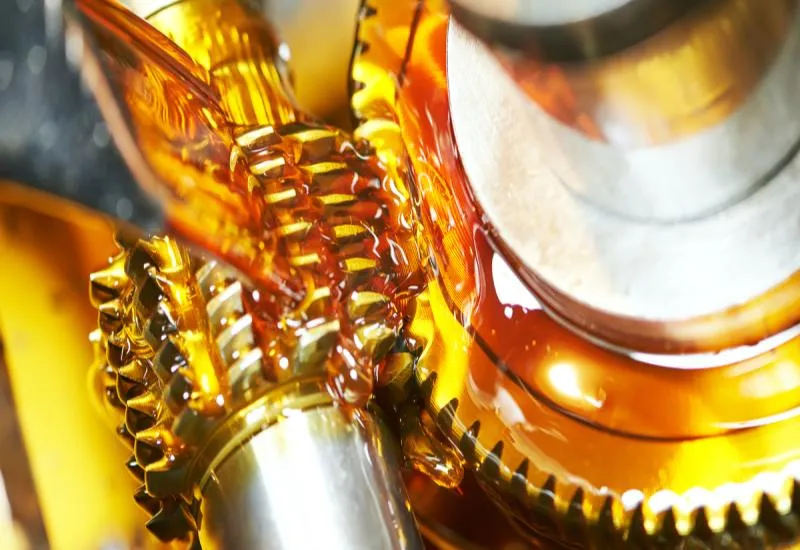
A degraded lubricating oil is a threat to any machine because, being degraded, it does not perform its function well. This increases friction and temperature and shortens its service life, and makes the equipment more prone to breakdown from wear of its components, such as gears, bearings, pistons or bushings, for example.
Lubricant analysis also makes it possible to detect whether there are metallic and non-metallic elements in the fluid and, therefore, to find out whether or not there is wear. If there is, measures will need to be taken to prevent this deterioration from continuing and putting the equipment at risk.
The presence of contaminants is another warning sign that we should not overlook, along with the lubricant’s density and viscosity. These particles can be liquid or solid, and of internal or external origin. As for external contamination, dust, moisture or the use of unsuitable products that react chemically with the equipment materials can generate solid residues and cause machine failures.
Creativeit’s lubricant testing laboratories provide quality and condition-monitoring programs for the marine, automotive and industrial industries, among others. The only laboratory in the country that PROVIDES VIDEOS AND PHOTOGRAPHS OF ALL PROCEDURES, and where the customer can also attend to witness the tests.
Creativeit’s services provide reliable information on the quality and performance of the lubricants and oils used in diesel and gasoline engines and in other mechanical systems. Quality control testing services include lubricant analysis programs for large high-performance engines and drivetrains, ships, trains, etc. Intertek’s lubricant quality testing helps our customers minimize costly repairs and lost time; we alert our customers to small faults before they appear and become big, costly problems.
Creativeit’s services allow lubricant manufacturers to rate their quality in order to obtain approvals under new national standards and industry requirements.
Our monitoring programs are simple and affordable. The testing and condition-monitoring services we provide for machinery lubricating oils allow us to deliver valuable, comprehensive reports on both the condition of the lubricants and of your machinery. Our programs are tailored to each customer to meet their needs and to ensure that sampling, shipping, testing and report delivery are correct and efficient.
Lubricant services:
- Testing of transmission system lubricants
- Gear lubricant testing
- Oxidation and corrosion testing
- Testing of lubricants for automotive gasoline engines
- Testing of lubricants for automotive diesel engines
- Viscosity, density, interfacial tension, acidity, moisture content, sulfur and other tests.