VIBRATION ANALYSIS IN MEXICO
Vibration analysis services based in Monterrey, Nuevo León, Mexico. We travel throughout the country and perform analysis on ducts, motors, turbines, shafts, piping, fans, gears, pumps, gas or chemical pipelines, and other equipment and installations, in accordance with ISO 10816, ISO 7919, ISO 13376 and IEEE 112. We have experience on oil platforms, in the mining industry and in other hazardous areas. We offer service, sales, and rental of vibration equipment and thermographic scanning cameras to complement your work in Monterrey, Mexico. Well-known brands include Agilent, HP, Fluke, Flir, and more. We also perform ductor resistance studies and tests on circuit breakers, busbars and sheets, as well as Megger-type high-resistance tests on the insulation of windings and coils of all kinds, up to 10 kV and 10 teraohms. Natural gas pressure pulsation studies of compressors at installation stations per API STD 618.
Benefits of performing a vibration analysis:
Major reduction in unplanned maintenance costs (corrective maintenance).
Significant reductions in spare parts inventory thanks to a better understanding of the condition of the machinery.
Fewer emergency work orders and less overtime.
More efficient repairs and lower maintenance costs.
Increased production capacity, due to fewer rejects caused by equipment failures from excessive vibration.
Safer working conditions, since machines are not forced to run until they fail.
.
A machine in good condition maintains consistent process quality and extends the life of the equipment.
A machine with a fault, whether electrical or mechanical, generates vibrations. The frequencies of these vibrations are read and compared by the analysis instruments, which recognize specific parameters in them (the vibration signature) established over years of experience in the use and maintenance of machinery.
Predictive maintenance ensures continuous, stable production so that delivery deadlines are met. It is important to detect defects in their earliest stage: the goal is not to find out how much vibration a machine can withstand, but to detect it in time and avoid the problems that a damaged piece of equipment brings.
Today many companies are outsourcing their Machinery Condition Monitoring Programs to external companies and engineering firms. Other companies prefer to hire an outside consultant who only implements the monitoring program, which is later developed in-house.
The most basic way to check vibration is called OVERALL VIBRATION MEASUREMENT. This reading gives us a scalar value that describes the total amount of vibrational energy contained in a wave emitted by a machine. The idea behind this analysis is that a higher vibration level can indicate a serious problem that should be examined and/or monitored. In other words, the greater the vibration, the greater the severity of the problem.
Overall vibration values were, and still are, used simply because they are simple. The equipment used to collect this information is inexpensive and was at one time the only equipment available on the market. Unfortunately, even today and due to a lack of experience in this field, many maintenance managers have misconceptions about what vibration analysis is and how it works. For this reason, G&M Ingeniería has found it necessary to have qualified personnel in this area to make clear to our customers which vibration levels are considered acceptable for the various types of machines.
When computers became a widely used tool, it became possible to collect narrowband vibration data, or vibration spectra. A vibration spectrum separates the collected vibration into small frequency ranges. Different machine components and various faults produce vibration and vibration patterns at specific frequencies. Therefore, using a vibration spectrum, individual peaks and patterns in the spectrum can be related to an individual machine component and to specific faults in it. For this reason, certain technical information about the machine under analysis must be available, such as the number of blades on a fan, the number of impeller vanes on a pump, the number of teeth on a gearbox, etc.
Predictive vibration maintenance versus troubleshooting
Used in the context of predictive maintenance as a technique for detecting the progressive deterioration of machines, vibration analysis is an easy-to-use, accurate, efficient and economical technique. By contrast, using vibration analysis as a support technique for troubleshooting is more complicated, often less accurate depending on the experience and knowledge of the person applying it, and much more expensive.
The difference is that in predictive maintenance the general procedure is to monitor the machinery under repeatable test conditions and observe changes. As long as the machine does not fail, the vibration patterns should not change. Conversely, if the machine develops a fault, the patterns will change, and it will then be easy to determine where the fault has occurred and what is causing it.
Conclusions
Vibration analysis for machinery condition monitoring consists of taking vibration readings and comparing them against a preset alarm level.
The most essential and difficult part of implementing a predictive maintenance program is gathering the technical information about the machines, defining the measurement conditions, collecting good vibration data that is repeatable over time, and establishing baselines. Then we must manage all of this information in a database and include repair and replacement histories.
In the world of mechanical maintenance, vibration remains one of the earliest indicators of a machine’s “health.” At Creativeit we have modern equipment for predictive and preventive analysis, precision maintenance, and corrective maintenance. We use triaxial accelerometers for faster measurement. All of this is complemented by thermographic imaging cameras to quickly detect areas of thermal stress. This helps us keep machines running at their optimal performance level and maintain them at that level to avoid premature failures. The long-term benefits are enormous.
Many companies lack the resources to fully understand the condition of the machine with traditional analyzers, which require them to:
Make significant investments in initial setup and training.
Change their maintenance culture from preventive to predictive.
Assign full-time resources to learn and perform vibration analysis on rotating equipment.
Allow at least one year for maintenance teams to train and gain knowledge of vibration signs.
Interest in mechanical vibration came to industrial maintenance hand in hand with preventive and predictive maintenance in Mexico, driven by the alert that a vibrating element in a machine represents and the need to prevent the failures that vibration brings in the medium term.
The tests are used to determine the condition of rotating equipment, identifying problems at an incipient stage before they cause serious failures and unplanned shutdowns. These problems can include worn or defective bearings, mechanical looseness, misalignment, imbalance, electrical problems in the driving equipment, etc.
This kind of timely diagnosis avoids production losses, equipment damage, and the use of extraordinary labor and materials, resulting in better reliability, availability and profitability.
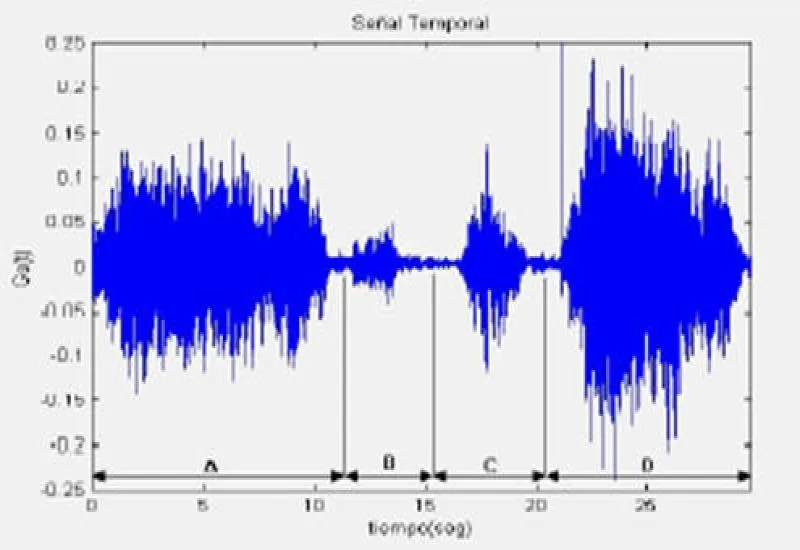
The Fluke 810 not only records the waveform of the rotating equipment’s motion, which is very complex because of the forces acting on it, but is also able, through a mathematical transformation, to provide the system’s response at the different frequencies at which those forces act. This frequency-domain spectrum is a graphical representation of the machine’s motion as a function of frequency. This capability allows an accurate diagnosis of the source of the vibration.
The results report contains the overall vibration amplitudes, frequency-domain vibration plots, and waveform plots. For each piece of equipment, a diagnosis of its operating condition is provided and, if abnormal vibrations exist, their cause and recommendations for correcting them.
Some types of vibration we analyze.
*Free vibration: occurs when a system vibrates due to an instantaneous excitation.
*Forced vibration: occurs when a system vibrates due to a constant excitation. Causes of mechanical vibration
*Below we detail the most common reasons why a machine or one of its components may vibrate.
*Vibration due to imbalance (rotating machinery).
*Vibration due to misalignment (rotating machinery).
*Vibration due to eccentricity (rotating machinery). Vibration due to bearing failure.
*Vibration due to problems with gears and drive belts (clearances, lack of lubrication, rubbing, etc.).