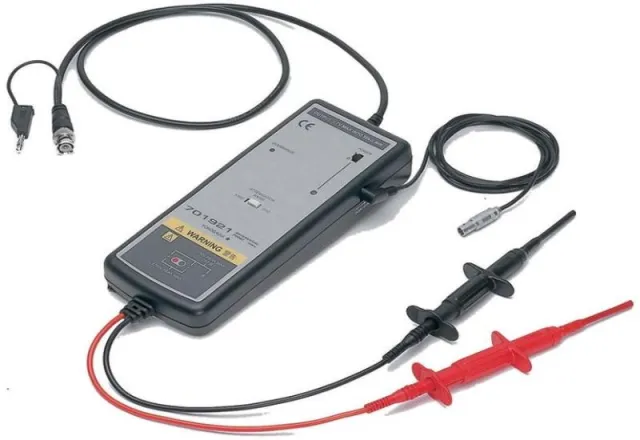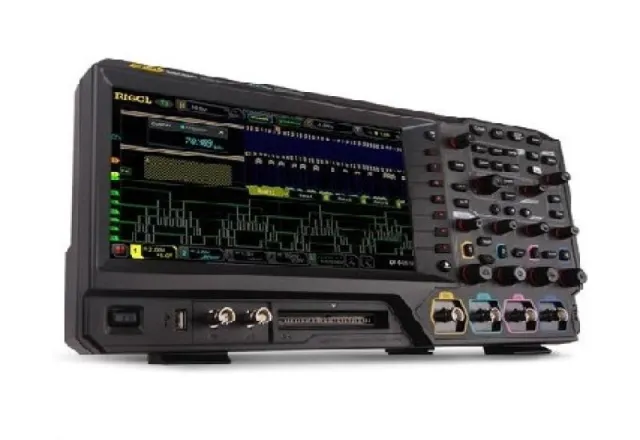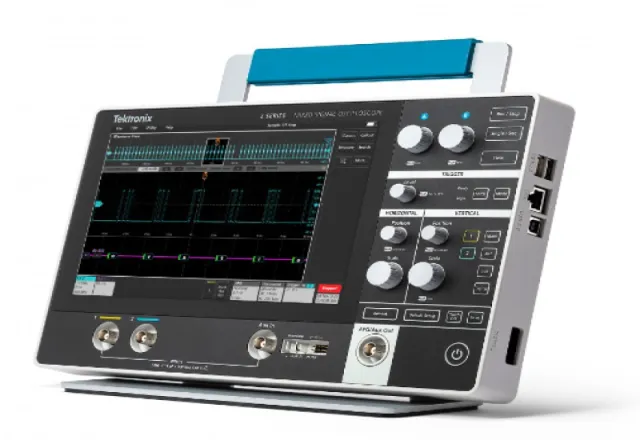
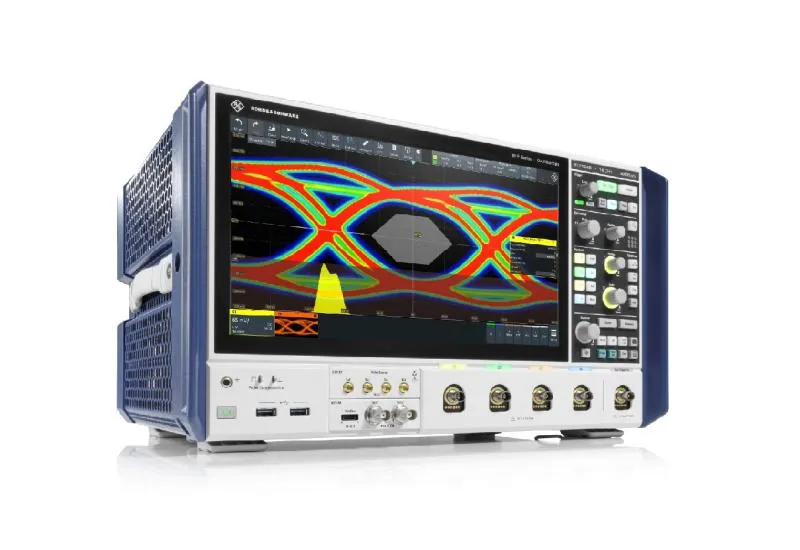
We have a wide variety of oscilloscopes for signal integrity testing available for rental and sale. We are a laboratory with a large inventory of measurement equipment at your service. Contact us to learn about our services and rental equipment.
Signal Integrity
Signal integrity refers to the accuracy and fidelity with which a signal is transmitted or received through a system or device. Measuring signal integrity involves evaluating various signal parameters to determine whether the signal remains intact and free of unwanted distortion.
Below are some common ways to measure signal integrity:
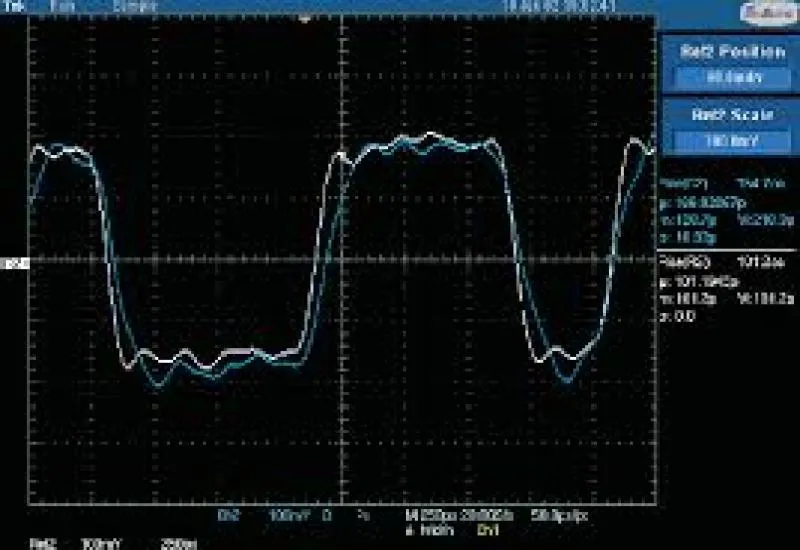
1. Observe the waveform on an oscilloscope: Use an oscilloscope to view the signal waveform. Check whether the waveform is clean, smooth and matches the expected signal. Look for distortion, noise, attenuation or overshoot, which indicate signal integrity problems.
2. Measure bandwidth: Use an oscilloscope or a spectrum analyzer to measure the signal bandwidth. Make sure the bandwidth of the measuring instrument is sufficient to capture the highest frequencies present in the signal.
3. Check the sample rate: Verify that the sample rate of the oscilloscope or data acquisition device is high enough to capture and accurately represent the original waveform.
4. Measure jitter (timing variation): Jitter refers to the timing fluctuations of a periodic signal. Use specialized equipment, such as jitter analyzers, to measure and quantify the jitter present in the signal.
5. Measure the signal-to-noise ratio (SNR): The signal-to-noise ratio indicates how much noise there is compared to the useful signal. A higher SNR indicates better signal integrity.
6. Measure total harmonic distortion (THD): THD measures the harmonic content in a signal. A low THD is desirable for maintaining signal integrity.
7. Verify phase stability: If the signal is periodic, you can verify phase stability to determine whether the signal phase changes over time.
8. Use specialized test equipment: Depending on the nature of the signal and the system, you may need specialized test equipment, such as signal generators, network analyzers, spectrum analyzers or cable testers, to evaluate signal integrity in more complex situations.
Signal integrity can depend on both the measuring instrument and the signal source. It is important to use high-quality measurement equipment and well-calibrated signal sources to obtain accurate and reliable results. Always consult the measuring instrument’s user manual and follow the manufacturer’s recommendations to make accurate measurements.
Signal integrity evaluation
To evaluate the signal integrity of the oscilloscope, it is important to make sure the instrument itself works correctly and can measure and display signals accurately.
Here are some steps and considerations for evaluating oscilloscope signal integrity:
1. Oscilloscope calibration: Before making any measurement, make sure the oscilloscope is properly calibrated. Many modern oscilloscopes have automatic self-calibration functions. If you are not sure how to calibrate the oscilloscope, consult the user manual or contact the manufacturer’s technical support.
2. Probe verification: Oscilloscope probes are essential components that can affect measurement accuracy. Make sure the probes are in good condition and properly calibrated. Some oscilloscopes have a function to check probe compensation, which helps ensure more accurate measurements.
3. Check bandwidth and sample rate: These are two key parameters that affect the oscilloscope’s ability to accurately capture high-frequency signals. Make sure the oscilloscope’s bandwidth and sample rate are sufficient for the signals you want to measure.
4. Test triggering: Triggering is crucial for stabilizing the display of specific events in a signal. Make sure the oscilloscope’s triggering functions are reliable and let you capture the desired events accurately.
5. Verify vertical resolution: Vertical resolution refers to the oscilloscope’s ability to measure small variations in signal amplitude. Make sure the oscilloscope has enough vertical resolution for the measurements you want to make.
6. Test response to signals of different shapes and frequencies: Use a known, well-calibrated signal source to verify the oscilloscope’s ability to properly represent different waveforms, such as sine, square or triangle waves, at different frequencies.
7. Automatic measurements and advanced analysis: Check whether the oscilloscope offers automatic measurements and advanced analysis to make signal evaluation easier and to get more detailed information about signal characteristics.
8. Comparison with another oscilloscope (if possible): If you have access to another oscilloscope that is considered reliable and accurate, you can compare the measurements of both to verify the consistency and accuracy of the oscilloscope under test.
While evaluating the oscilloscope’s integrity is important, it is also essential to make sure the signals you are measuring are as accurate and clean as possible, since a poor input signal will also affect the results. Always use reliable signal sources suited to your measurements.