This service focuses on reproducing highly controlled environmental conditions to validate the response of sensors, electronic systems, RF modules, antennas, dielectric materials and sensitive devices. Humidity can influence permittivity, attenuation, noise, impedance, signal stability and insulation degradation, which makes environmental simulation essential.
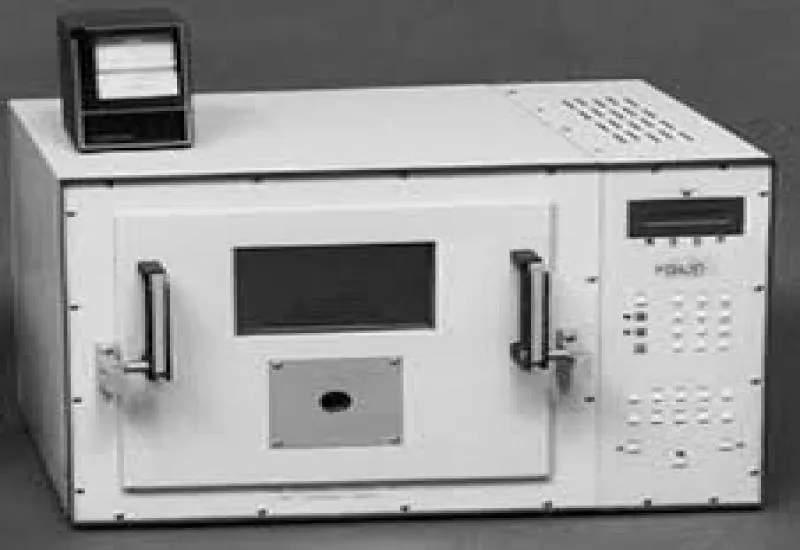
We use the Sun Electronics EC01 chamber with the ETS 514 controller to simulate steady-state or dynamic humidity ranges, enabling performance tests at different humidity levels. In this environment it is possible to evaluate the stability of humidity sensors, IoT modules, capacitive sensors, RF circuits, coaxial cables, materials whose dielectric constant changes with humidity, and critical electronic systems.
Measurements are made using vector network analyzers, real-time spectrum analyzers, noise figure meters, dielectric characterization systems, resistance meters, impedance analyzers and high-resolution oscilloscopes. Related standards include IEC 60068-2-78, IEC 60068-2-30, IPC methods for PCBs, ASTM D257, ASTM E2412 for humidity characterization and various environmental recommendations for electronic sensors.
The customer receives a detailed technical report that includes the applied environmental profile, photographs of the setup, stabilization conditions and analysis of the electrical and electronic response at each humidity level.
In all of our environmental analyses and laboratory tests where temperature is a critical parameter, we guarantee metrological control through in-house verification of our thermal systems. Each test is backed by temperature validation using our dry-block calibrator, with an operating range of -30 °C to 150 °C, resolution of 0.01 °C, thermal stability of ±0.02 °C and display accuracy of ±0.1 °C. We also evaluate block uniformity (horizontal ≤ ±0.05 °C) and the controlled vertical gradient, which ensures that measurements remain within the established uncertainties. This approach allows us to confirm the stability, uniformity and accuracy of the test conditions, providing reliable, traceable and technically supported results. The expanded uncertainty of the system is determined as a function of the operating point, the sensor under test and the process conditions.