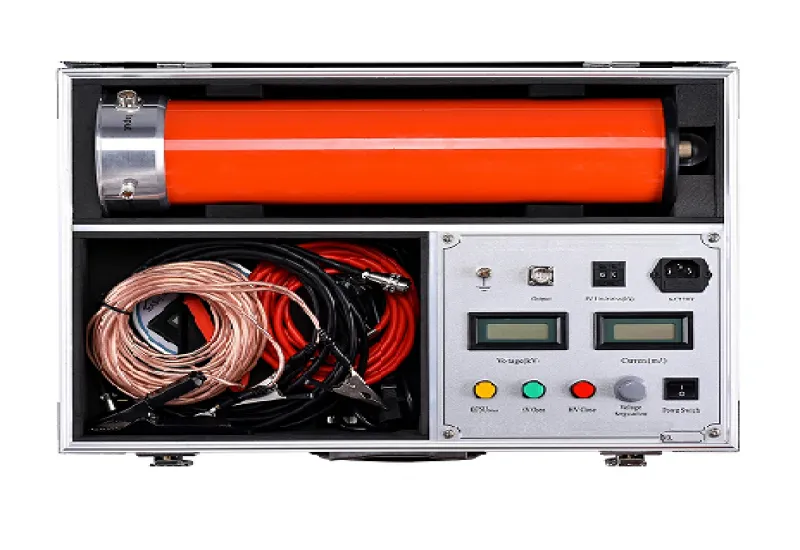
A HiPot (High Potential tester) is an electrical test instrument used to apply high voltages to an electrical component in order to verify the strength of its insulation. In other words, it is a tool that simulates extreme voltage conditions to see whether a cable, motor, transformer, or switchboard can withstand them without its insulation failing.
What exactly does a HiPot tester do?
- Applies a voltage well above the normal operating level between the live conductors and ground (or between phases).
- Monitors the leakage current that may pass through the insulation.
- Detects whether there is a dielectric breakdown or a weak point in the insulating material.
What parts does a HiPot tester have?
A typical HiPot tester includes:
|
Part |
Function |
|
High-voltage source |
Generates the test voltage (AC, DC, or VLF). |
|
Current meter |
Measures the leakage current or dielectric discharge. |
|
Screen or display |
Shows the measured values (voltage, current, time, etc.). |
|
Test controls |
Allow adjustment of the voltage, duration, test type, etc. |
|
Connection terminals |
To connect the tester to the system under test. |
|
Safety protections |
Detect overloads and excessive leakage, and stop the test if necessary. |
Types of HiPot testers
|
Tester type |
Main application |
|
AC HiPot |
Verifies insulation with alternating current (50/60 Hz). |
|
DC HiPot |
Ideal for long cables, uses direct current. |
|
VLF HiPot |
Uses very low frequency (0.1 Hz), ideal for medium-voltage cables. |
Where are HiPot testers used?
- Cable and motor manufacturing.
- Industrial electrical maintenance.
- New electrical installations.
- Post-repair equipment checks.
Why is a HiPot tester important?
Because it helps to:
-
Prevent electrical failures.
-
Ensure equipment is safe before operating.
-
Detect insulation problems that are not visible to the naked eye.