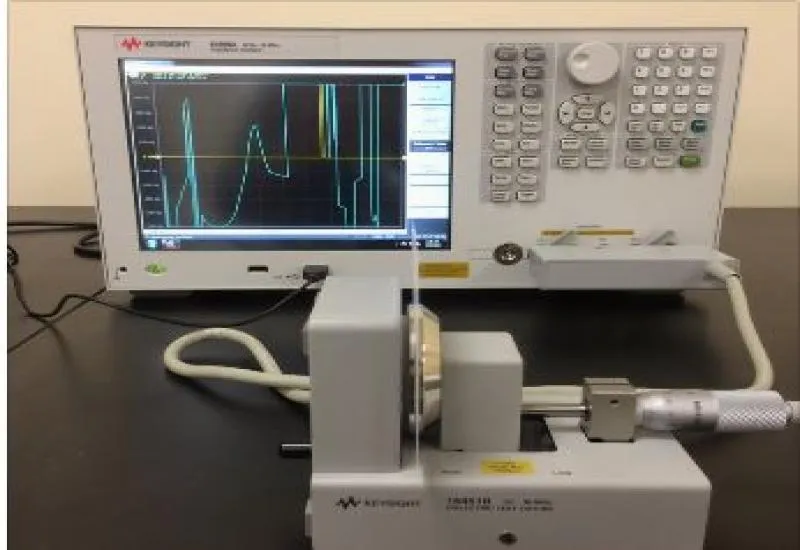
Electrical Testing and Physical Properties of Materials
In our laboratory we perform a wide range of electrical and physico-electrical tests for the characterization of conductive, semiconductor and dielectric materials.
All tests are performed in accordance with ASTM, IEC and ISO standards, using precision instruments to ensure reliable, traceable and repeatable results.
Electrical Resistivity
Evaluates a material’s ability to oppose the flow of electric current.
It is essential for determining whether a material is a conductor, semiconductor or insulator.
The value is obtained by measuring the voltage drop under a controlled current, expressed in ohm-meters (Ω·m).
Electrical Conductivity
Measures how easily electrons move through the material.
It is applied to metals, coatings, liquid solutions and conductive polymers, determining their efficiency as a conducting medium.
Its value is the inverse of resistivity.
Surface Resistance
Determines the material’s ability to dissipate electrical charge across its surface.
It is an essential parameter for ESD coatings, packaging and dissipative paints, where charge buildup must be controlled.
Results are expressed in ohms per square (Ω/m).
Electrical Permittivity (ε)
Indicates the material’s ability to store electrical energy when exposed to an electrostatic field.
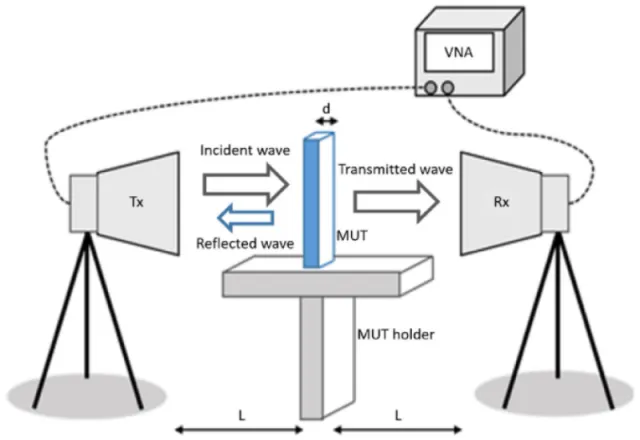
High permittivity reflects an efficient insulating or dielectric material, ideal for capacitors, cables and high-voltage equipment.
Magnetic Permeability (μ)
Represents how easily a material can be magnetized under the action of a magnetic field.
It is analyzed in transformer cores, shielding and electromagnetic components, where the magnetic response must be controlled.
Density
Defines the mass per unit volume of the material.
This value directly influences its electrical, thermal and mechanical properties and is indispensable for the complete characterization of solids and liquids.
Dielectric Strength
Determines the maximum electric field an insulating material can withstand without electrical breakdown.
It is essential in the evaluation of solid, liquid or gaseous insulators used in cables, transformers and high-voltage equipment.
Contact Resistance
Measures the voltage drop and electrical losses at a joint or connection point.
Low contact resistance ensures efficiency and safety in connectors, terminals, switches and bolted joints.
Loss Tangent (tan δ)
Evaluates the dielectric losses that occur when a material is subjected to an alternating electric field.
A low tan δ value indicates high dielectric quality and minimal energy dissipation, while high values reveal deterioration or impurities in the material.
Results and Applications
Our tests provide a comprehensive characterization of the electrical and physical behavior of materials, supporting processes such as:
- Industrial quality control
- New product development
- Material certification
- Research and technical analysis
Electrical resistivity * Electrical conductivity * Surface resistance * Permittivity * Permeability * Density * Dielectric strength * Contact resistance * Loss tangent of solids and liquids