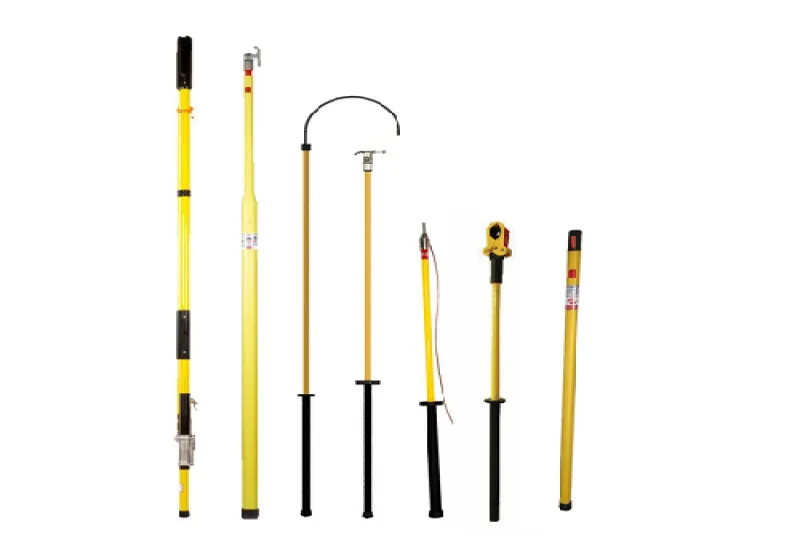
Hot sticks are a key tool for work on medium- and high-voltage electrical installations, especially when a safe distance must be maintained.
What are electrical hot sticks?
Electrical hot sticks are elongated insulating rods (such as poles or tubes) made of dielectric materials (such as fiberglass or epoxy resin), which allow the worker to operate or work on energized electrical systems from a distance without risk of electrocution.
What are they used for?
They are used to:
- Open or close disconnect switches.
- Verify the absence of voltage (using detectors).
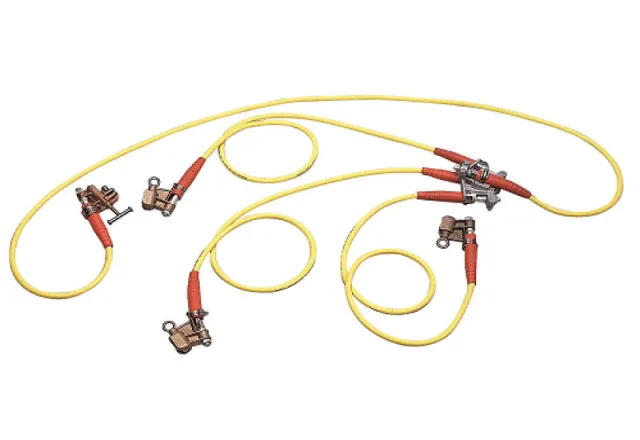
- Install grounds (with special clamps).
- Handle fuses or energized equipment.
- Clean insulators on live lines.
- Install temporary protective devices.
|
Part |
Function |
|
Insulating body |
Protects the operator from electrical contact. |
|
Head or attachment |
Interchangeable part depending on use (hook, clamp, detector, etc.). |
|
Handle |
Lower section for gripping (non-conductive). |
|
Stop or base |
Prevents slipping and provides stability. |
Types of electrical hot sticks (by use)
|
Type |
Main use |
|
Switching hot stick |
Operating switches, disconnectors, knife switches, etc. |
|
Voltage detection hot stick |
Verifying voltage (with built-in detector). |
|
Grounding hot stick |
Installing grounding and short-circuit cables and clamps. |
|
Telescopic hot stick |
Adjustable length, ideal for different heights. |
|
Rescue hot stick |
For removing a person injured by electric shock. |
Material and characteristics
- Fiberglass or epoxy: Insulating, lightweight, and strong.
- High dielectric strength: Withstand voltages up to 400 kV or more.
- Non-flammable and weather-resistant.
Related standards
- IEC 60855 – Insulating tools for live working.
- UNE-EN 61235 – Requirements for insulating hollow tubes.
- OSHA and NFPA 70E – Electrical safety rules in the U.S.
An electrical hot stick is an insulating tool that makes it possible to perform switching operations on energized electrical systems while keeping a safe distance, protecting the worker from direct or arc-related electric shock.